
-
Apr 20, 2026 16:30
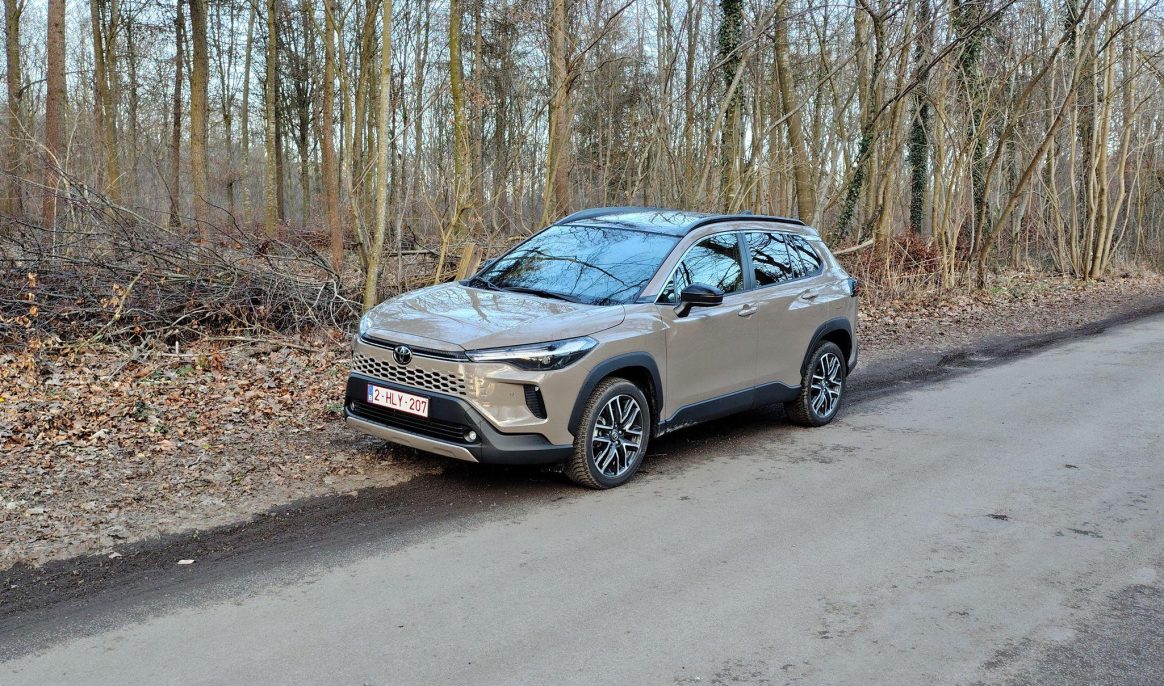
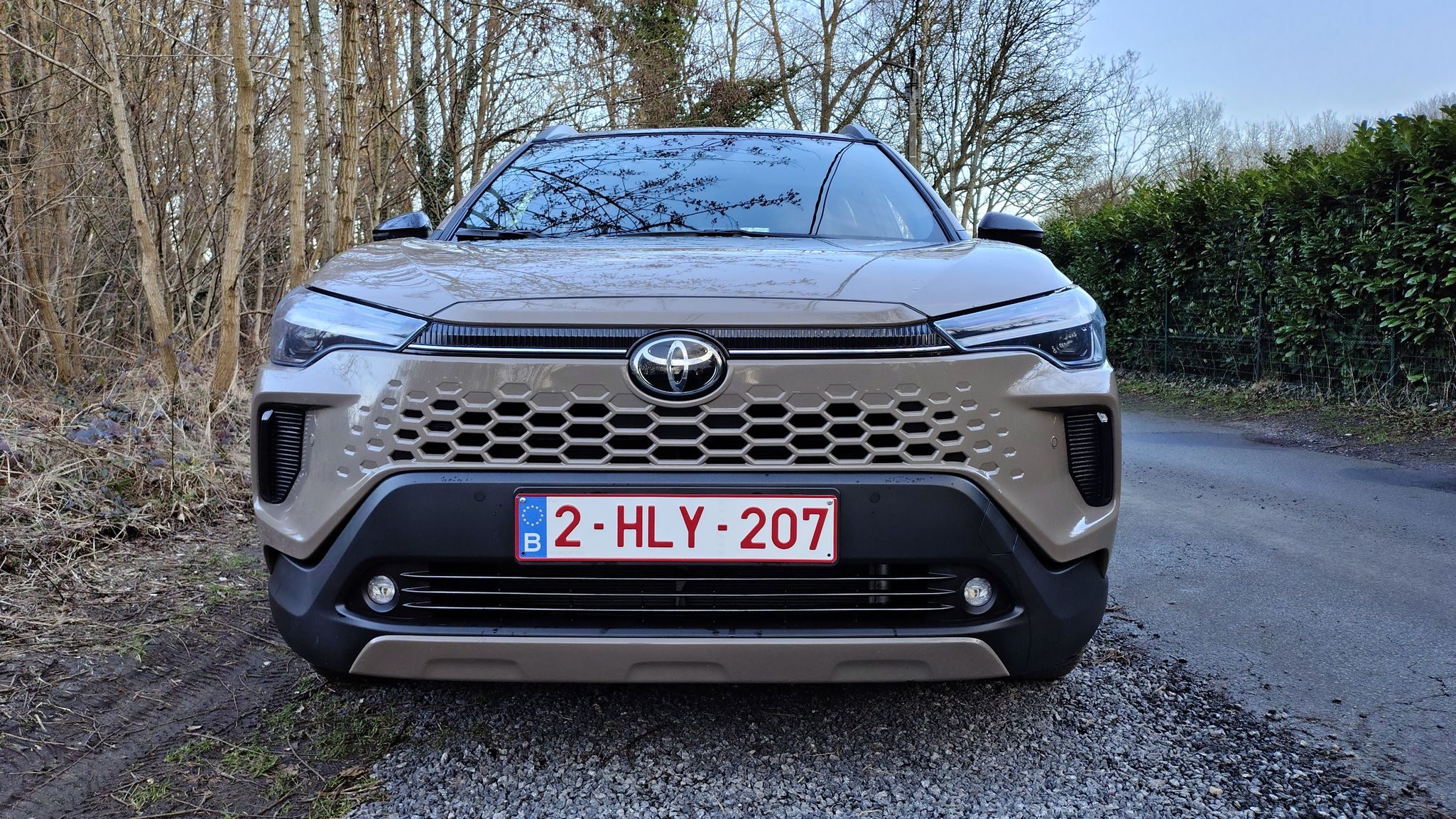
Hybrids are Toyota's niche. So it's hardly surprising to find such powertrains in the Corolla Cross, a compact SUV. During this road test, we had the entry-level solution: the 140 hp 1.8 HEV. Should we give in to the temptation of electrified petrol with the image of loyalty and rigor associated with the Japanese brand?
Engine! Despite the absence of a purr at the start, once you've pressed the Start button, the Toyota Corolla Cross does indeed have a 4-cylinder petrol engine under the hood. It'll soon wake up, though, as its self-charging hybridization system barely allows electric driving for more than 2-3km in urban areas, due to its lithium-ion battery of just 0.85 kWh (4.08 Ah). The 1.8 HEV version's 70 kW (95 hp), 185 Nm electric motor is mainly used for maneuvering and to relieve the internal combustion engine during acceleration. The latter, a 1.8 l with 98 hp and 142 Nm, would have a hard time towing this 1.4-ton Toyota on its own.
Concerto outdated
And it's precisely this 140 hp duo that is the beating heart of the Japanese model. After a silent start-up, the SUV vibrates slightly when the cylinders ignite. It all works smoothly, as long as the right foot doesn't need to do too much. In town, in particular, it's perfectly controlled. You need to keep an eye on the rev counter to detect when the internal combustion engine is on standby. Outside built-up areas, driving quietly, it's all the same. But when you need to pick up speed, it's not the same kind of lemonade.
One of the complaints with Toyota's hybrid systems, since the Prius, is the tendency to underpower the petrol engine. And since the transmission goes through a CVT, or rather an eCVT in this case, this often translates into a howling engine. In this gearbox, there's the motor used to turn the front wheels and for regeneration to recharge the battery, christened MG2. But there's a 2nd electric motor, the MG1, which acts as a starter for the internal combustion engine and as a generator. There are no belts or chains in this continuously variable transmission, like the CVTs of yesteryear. The eCVT uses an epicyclic gear train, and the electronics select the best solution between internal combustion, electricity or a combination of the two. It also simulates gears to avoid the coffee-grinder effect.
A failure when it comes to discretion under hard acceleration... An ear-splitting 0 to 100 kph in 9.9 s isn't exactly sporty. And even in Power mode, which exists alongside Eco and Normal modes, dynamic driving is no picnic. It can even get frustrating, especially as the steering is so soft. Add to this the fact that driving in B rather than D to increase regeneration becomes an excuse to rev up the engine when the battery is full. Stop! I want to listen to my music in silence...
Proper use
In short, budding Sébastien Ogiers won't find much thrill at the wheel of the Corolla Cross, at least not with the 1.8 l engine. Toyota offers a 2.0-liter solution, which will undoubtedly be livelier (0 to 100 km/h in 7.6 s) and less temperamental. I'd like to test it. In the meantime, I've swapped my Curve champion cap for my English one. So, as a well-mannered gentleman, I finally got to grips with this family SUV. Anticipation, calmness and gentleness... the key words for serenely enjoying the Corolla Cross. As a result, there's less hubbub, but still a little, and above all, more sobriety.
After all, the whole point of hybridization (apart from taxation in certain regions, with the 98 hp of the 1.8 l used in the tax calculation, just like the weight) is first and foremost to reduce fuel consumption. And Toyota doesn't need to take any lessons from anyone. My average over 600km was 6.2 l/100km with different driving styles in town, in the country and on the freeway. Without ever exceeding 120km/h. What's for more, I was able to pinpoint the best moments of the day by dipping into the My Toyota app on my smartphone, which is connected to the car. For example, driving in Waterloo at 50km/h without traffic jams, from the Butte du Lion to Rhode-Saint-Genèse in Brussels, averages 3.8 l/100km. This is slightly less true when traffic is less fluid (6.5 l/100 km). At 70km/h, almost non-stop, on a road linking two towns, you get an output of 4.4 l/100 km. 50km of freeway at constant speed swallows up 5.6 l/100 km. And what does the WLTP say? 5 l/100 km (113 g CO2/km). You can get there with a little practice. However, the (small) 36 l fuel tank means you'll have to go to the pump too often.
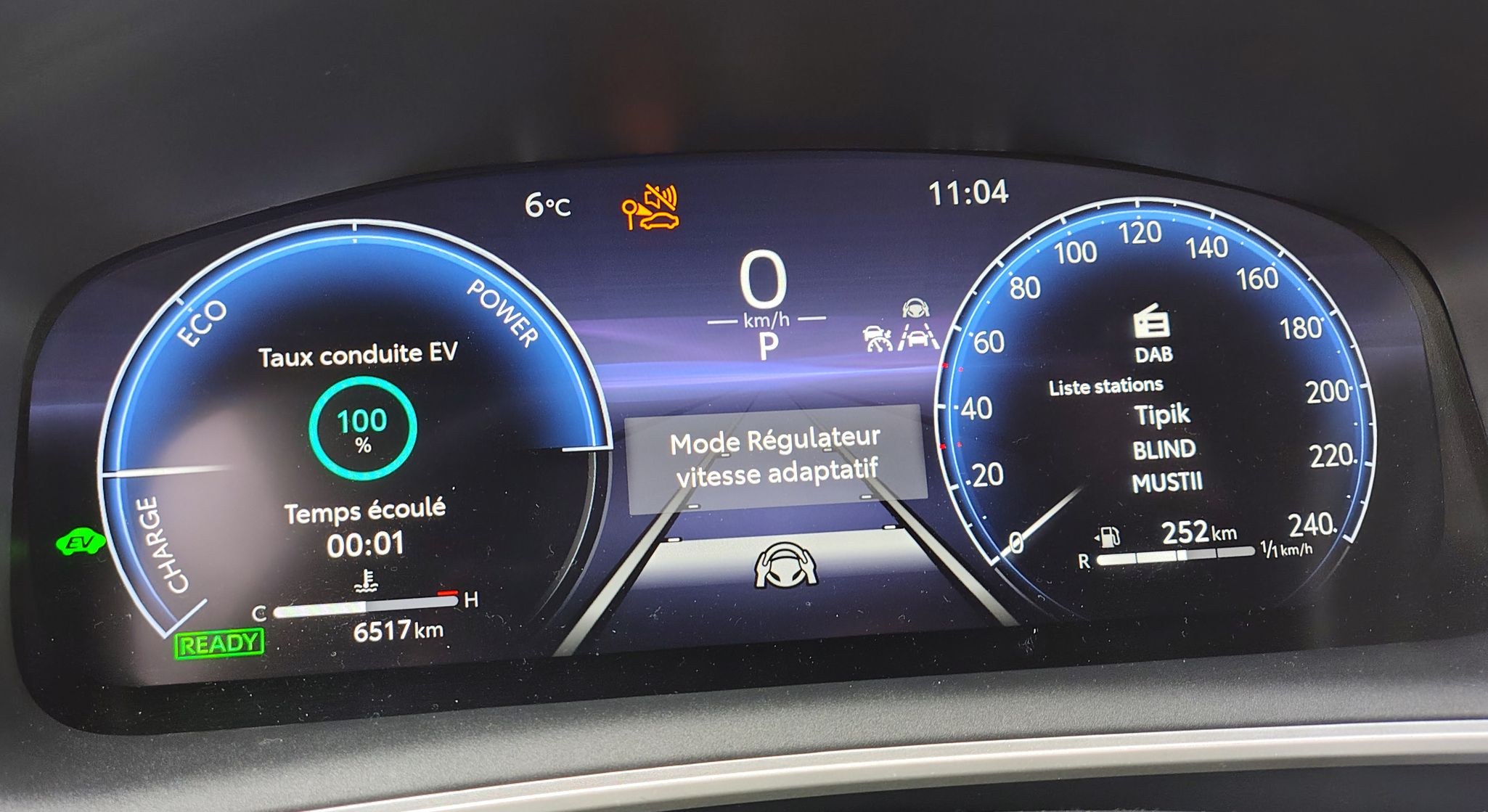
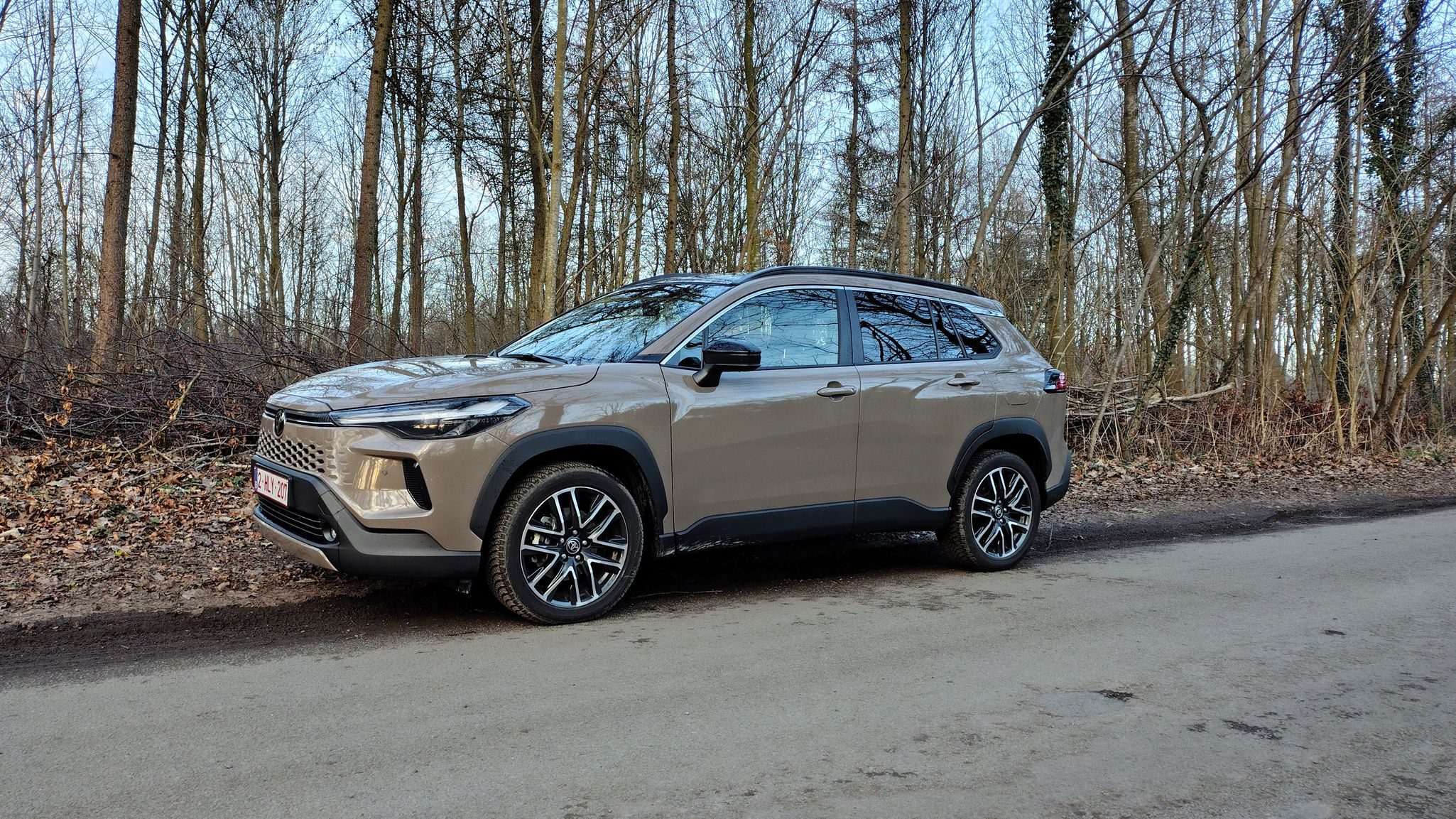
Aiming for frugality is also in line with the chassis' behavior. It's quite supple. In fact, it's fun to feel the car pump when the electric handbrake is deactivated. A short stretch on cobblestones demonstrated the damping's ability to handle the exercise without jarring the occupants. On the other hand, the steering wheel, and even the seat, sometimes rises up after the car crosses some bad junctions. Our test car was fitted with 18-inch Alken Euroall Season 4-season tires (225/50R18). A side-effect of this non-original fitment was that the actual speed was 5km/h slower than the speedometer reading.
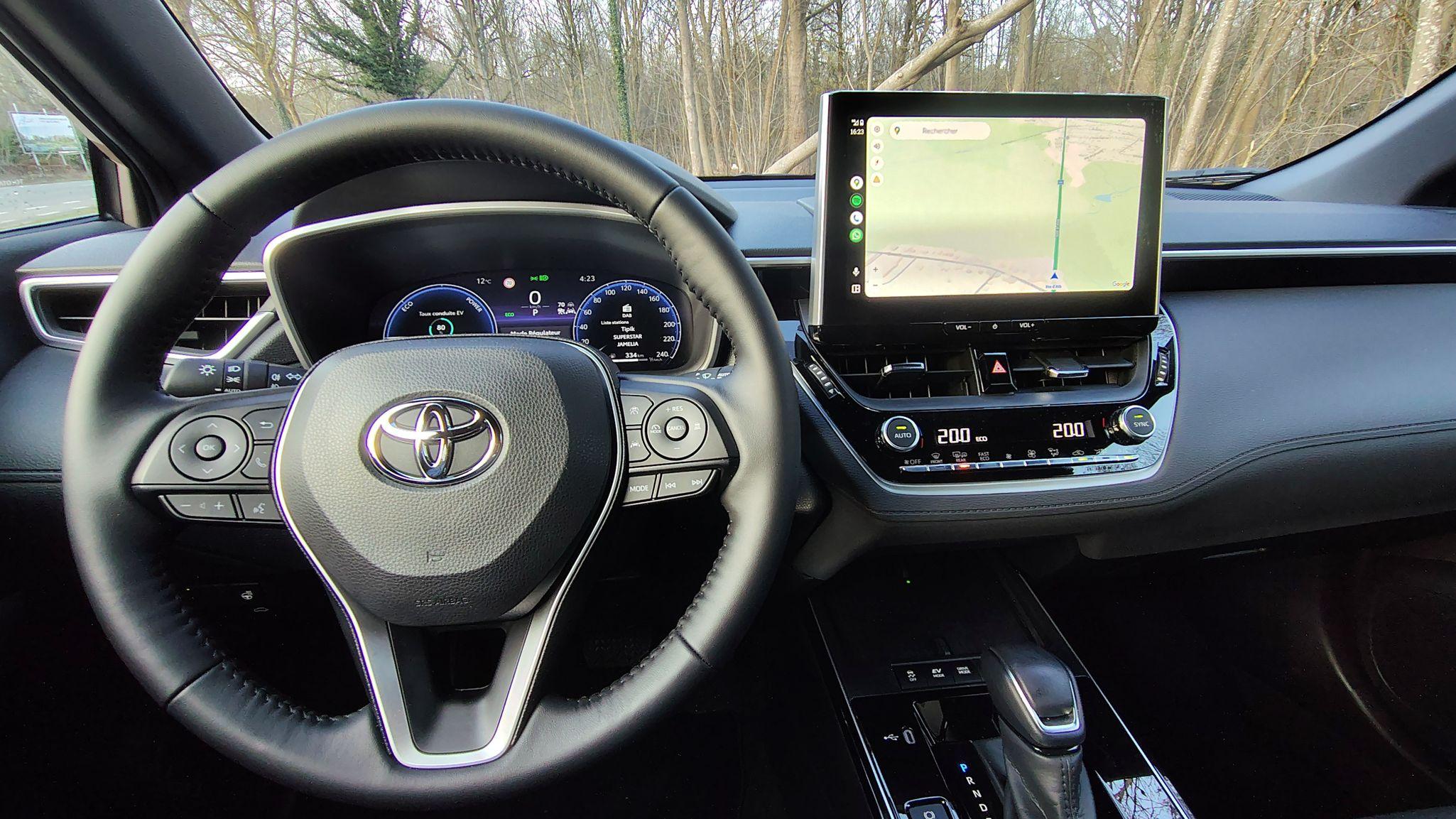
Of course, the Corolla Cross is fitted with the ADAS (driver assistance systems) typical of a 21st-century car, under the generic term Toyota Safety Sense 3.0. Dynamic cruise control is easy to activate and adjust. There's no need to jerk the steering wheel at every turn to remind you of the pseudo-correct trajectory. Confidence reigns, thank you Toyota. On the other hand, the LTA (Lane Tracing Assist) system regularly requires you to hold a steering wheel, which you're already holding! The trick? Giving a little back and forth to say that the driver is still there.
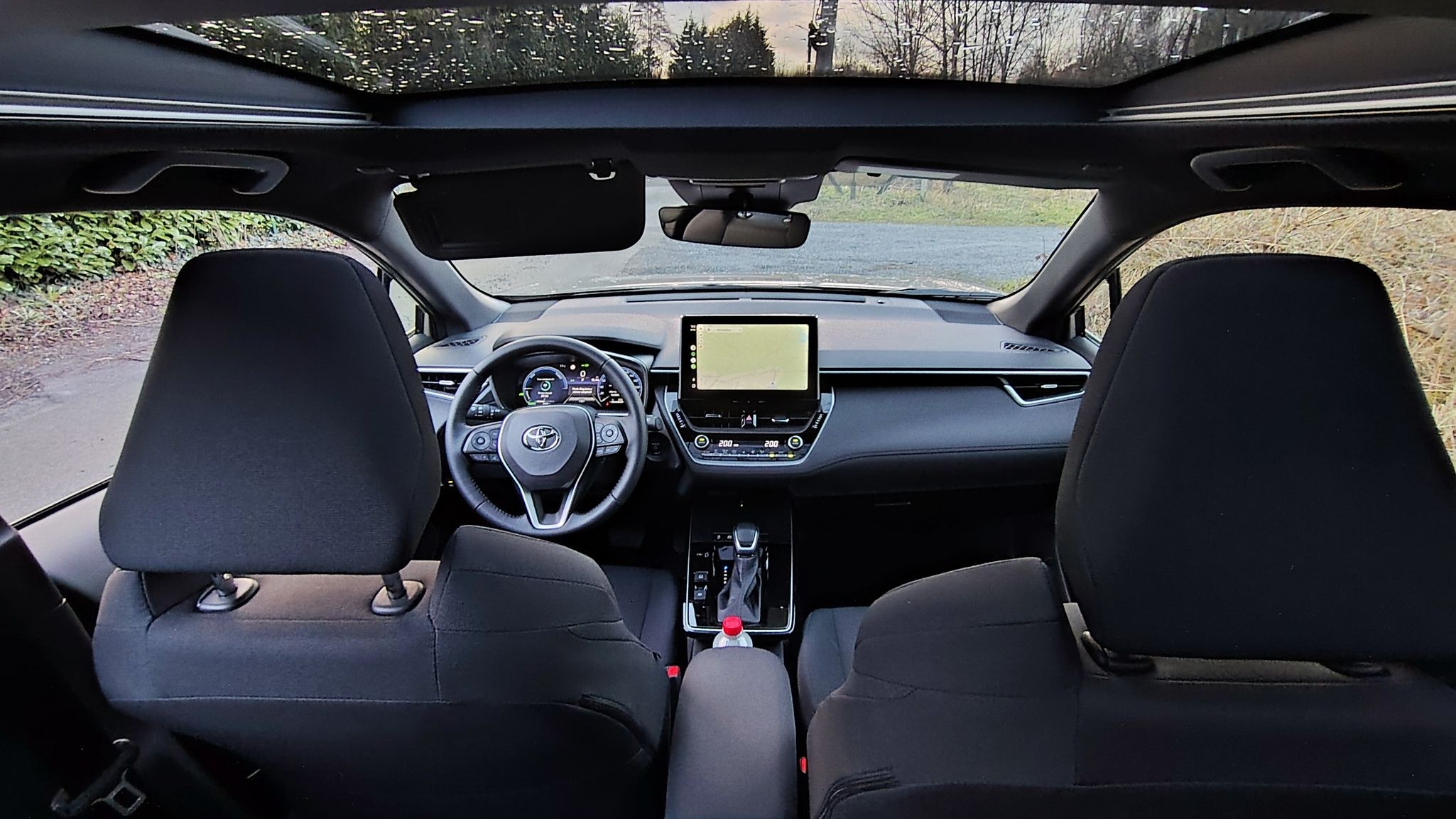
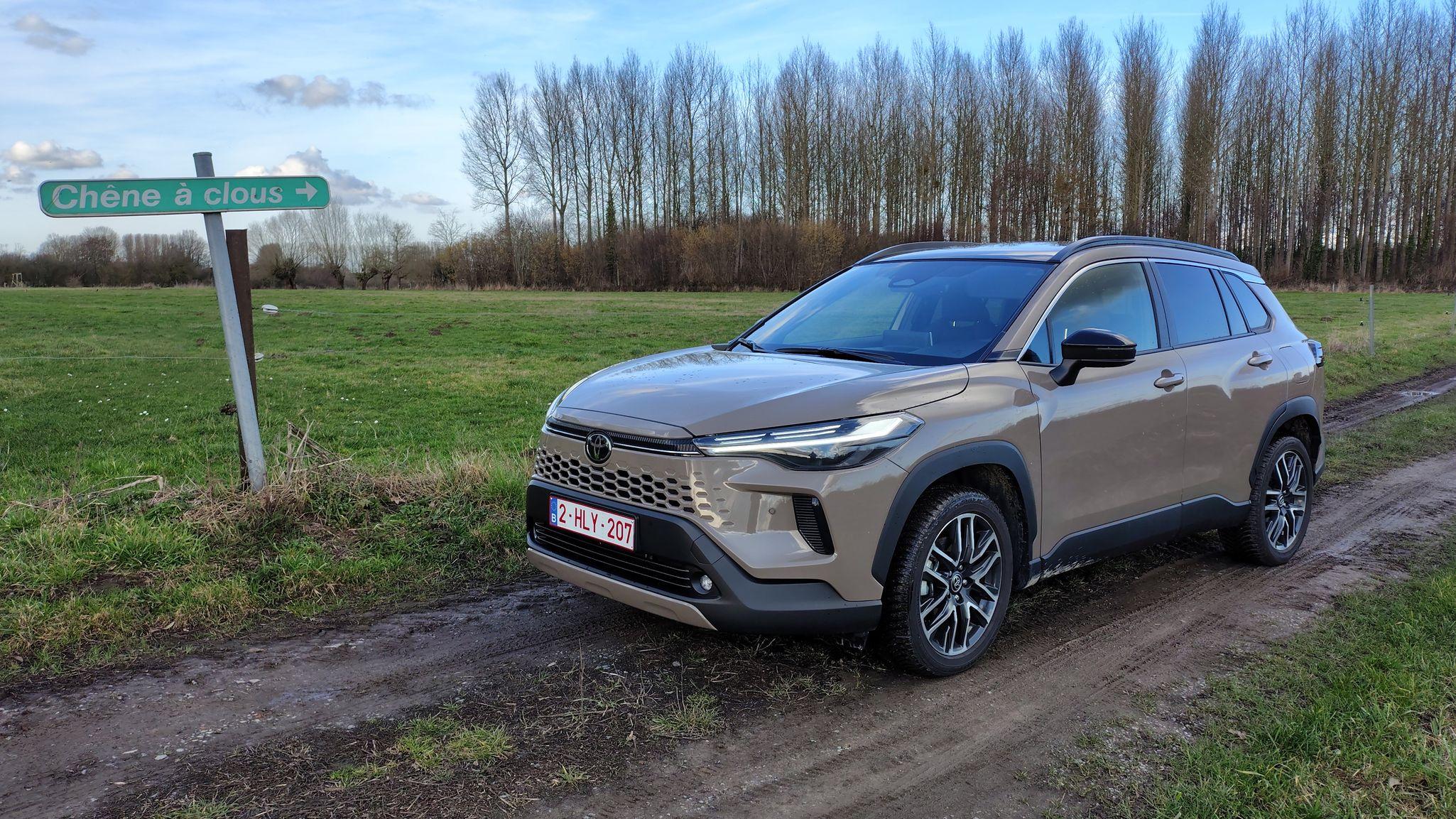
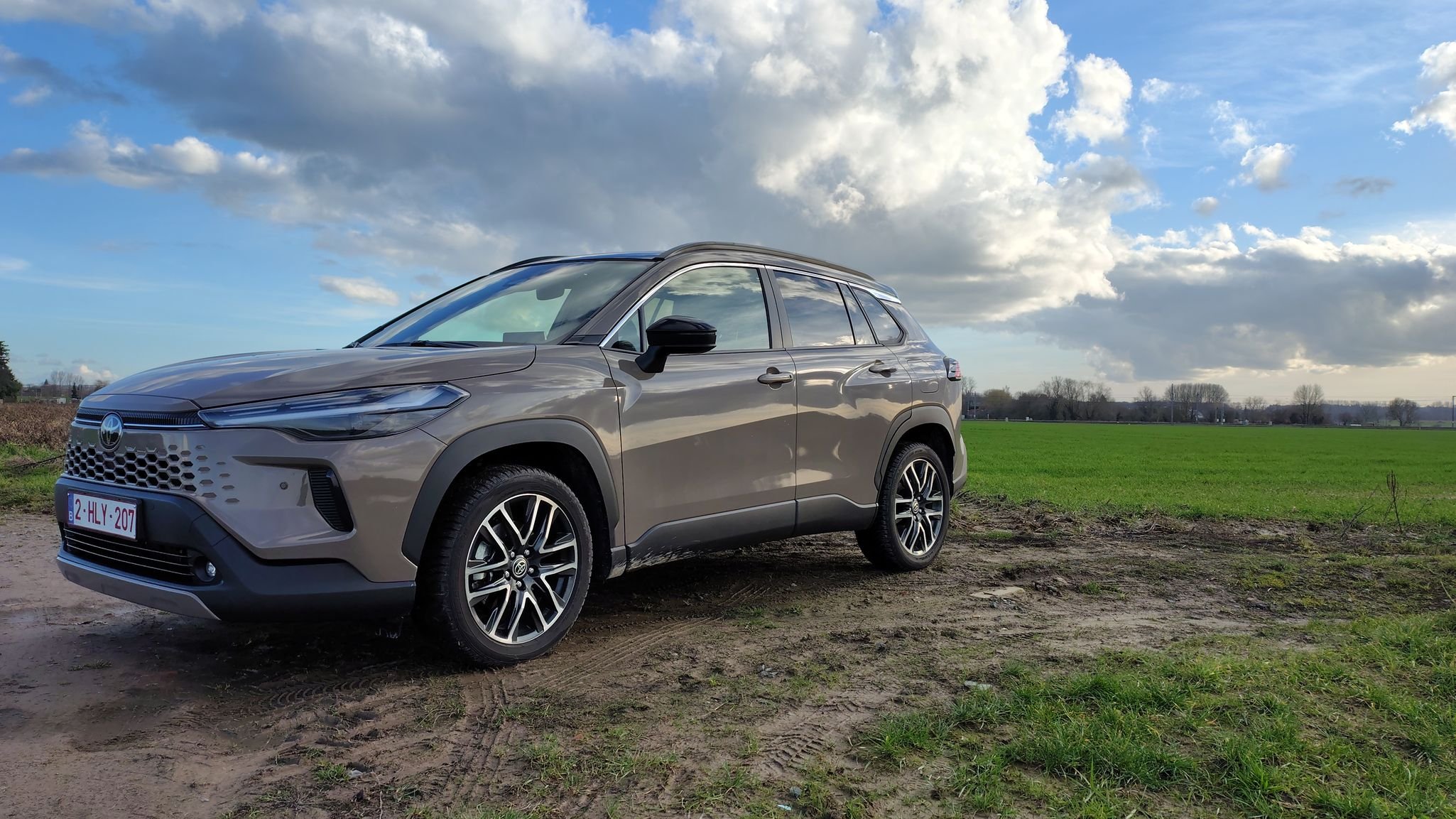
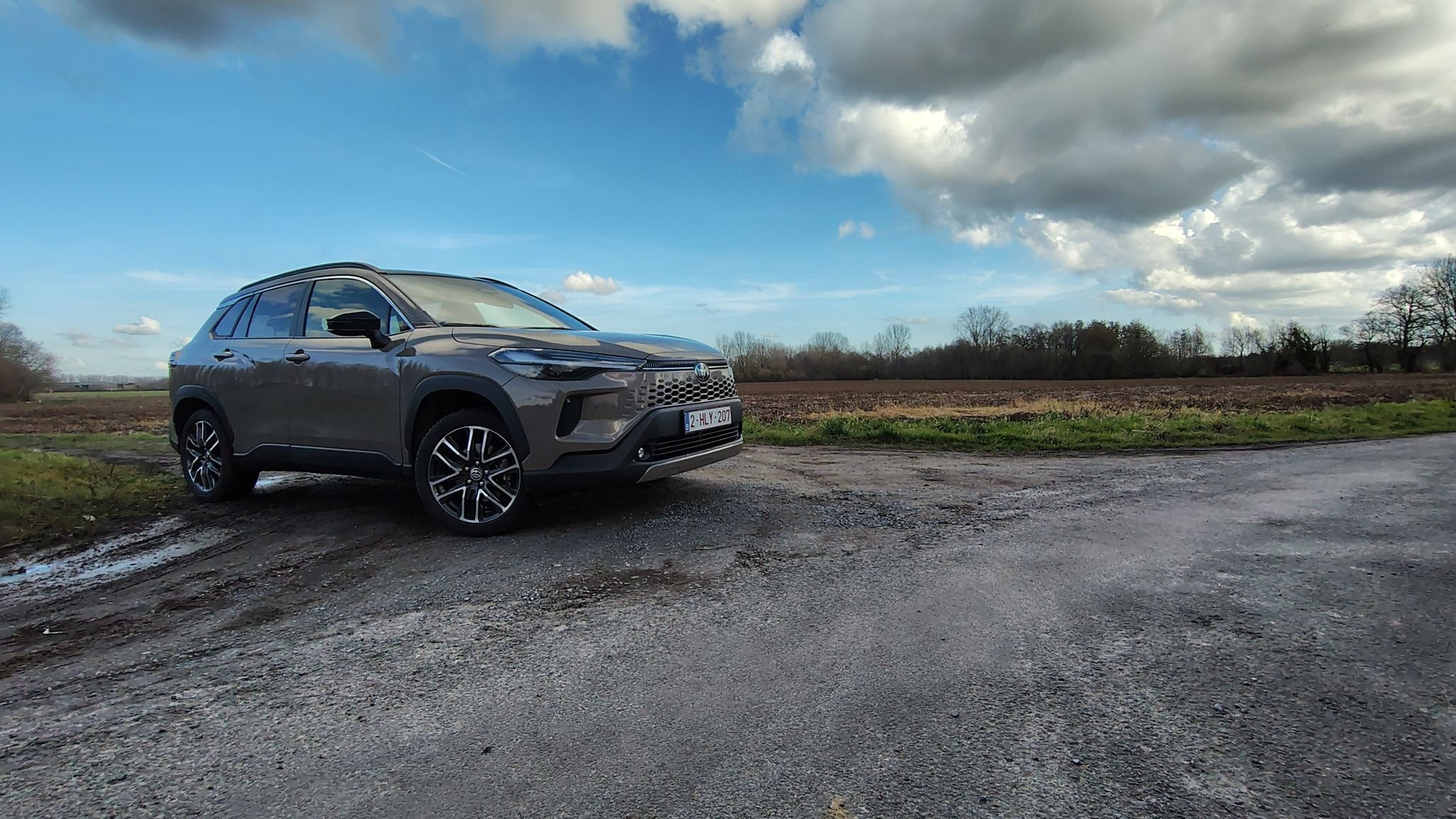
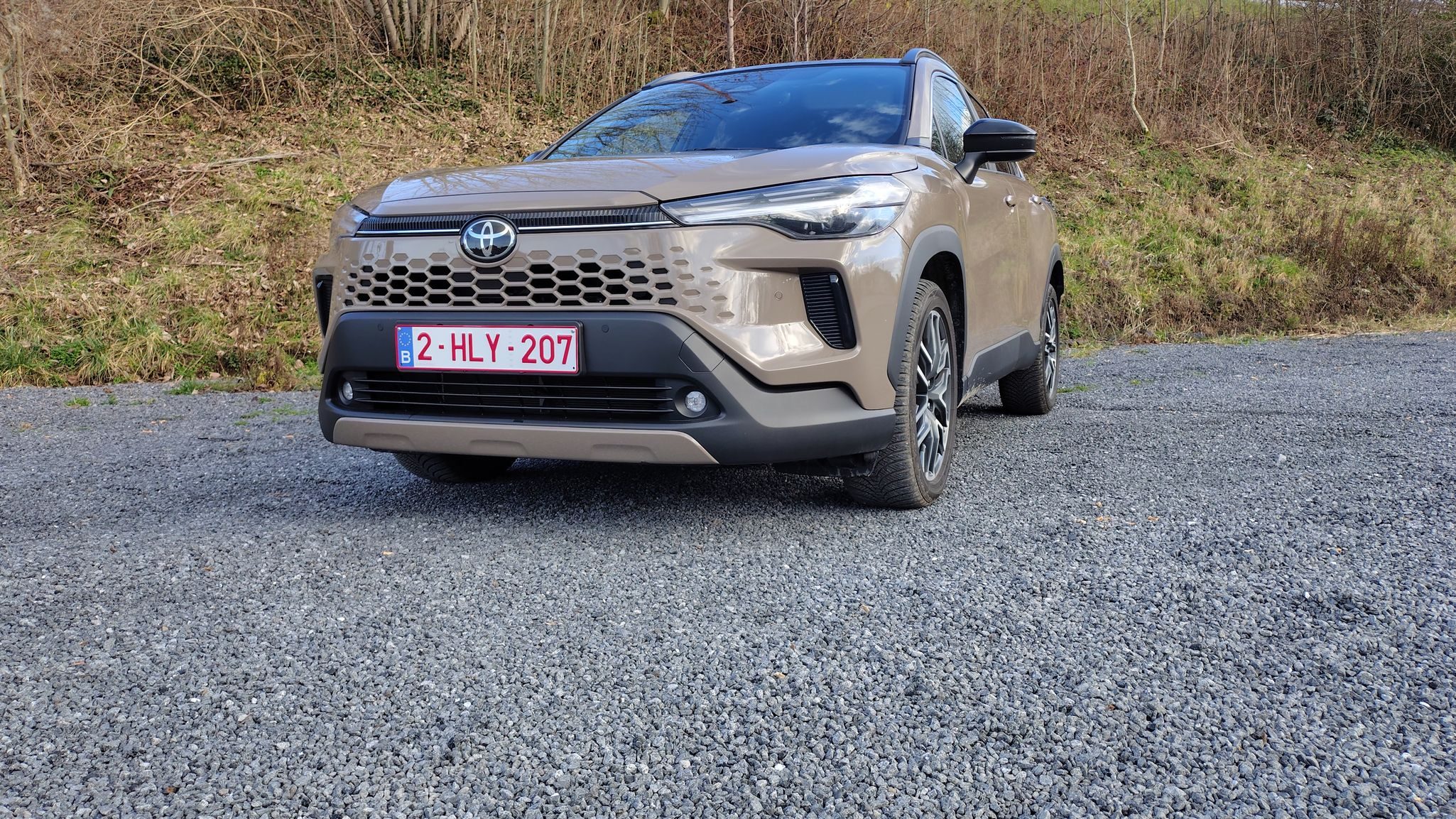
This SUV gave me a hard time when it came to ¾ front visibility, despite the quarter windows. The windshield pillars are so thick, they could - for example - hide a pedestrian about to cross. This required extra vigilance on my part in city traffic. So be it! This car is also available with 4-wheel drive, but the version tested here had 2-wheel drive at the front, despite its 16cm ground clearance and the (decorative) protective skis under the bumpers. As for the side air intakes at the front, they're apparently fake. Aesthetic bluster, folks!
Life in plastic
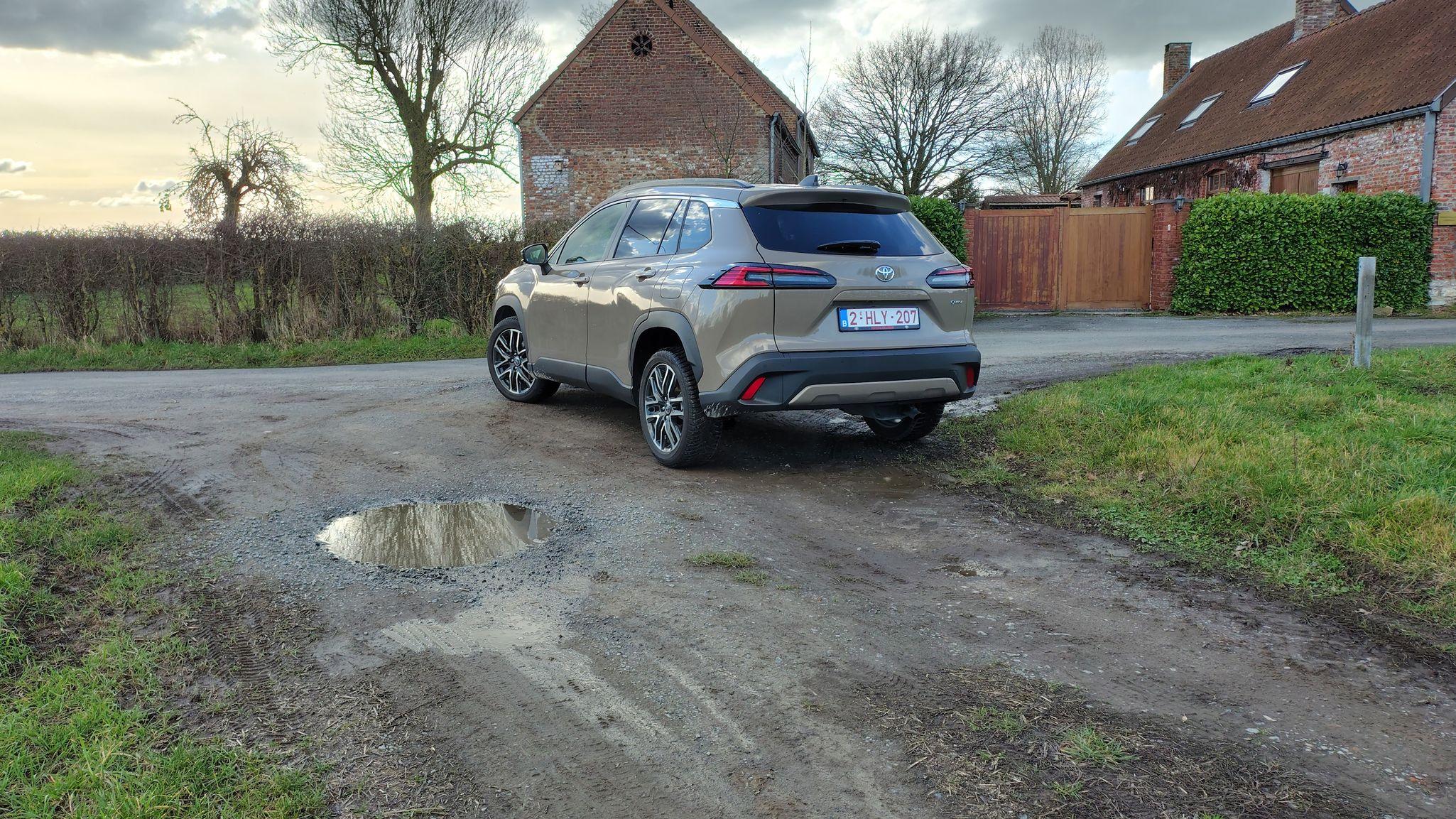
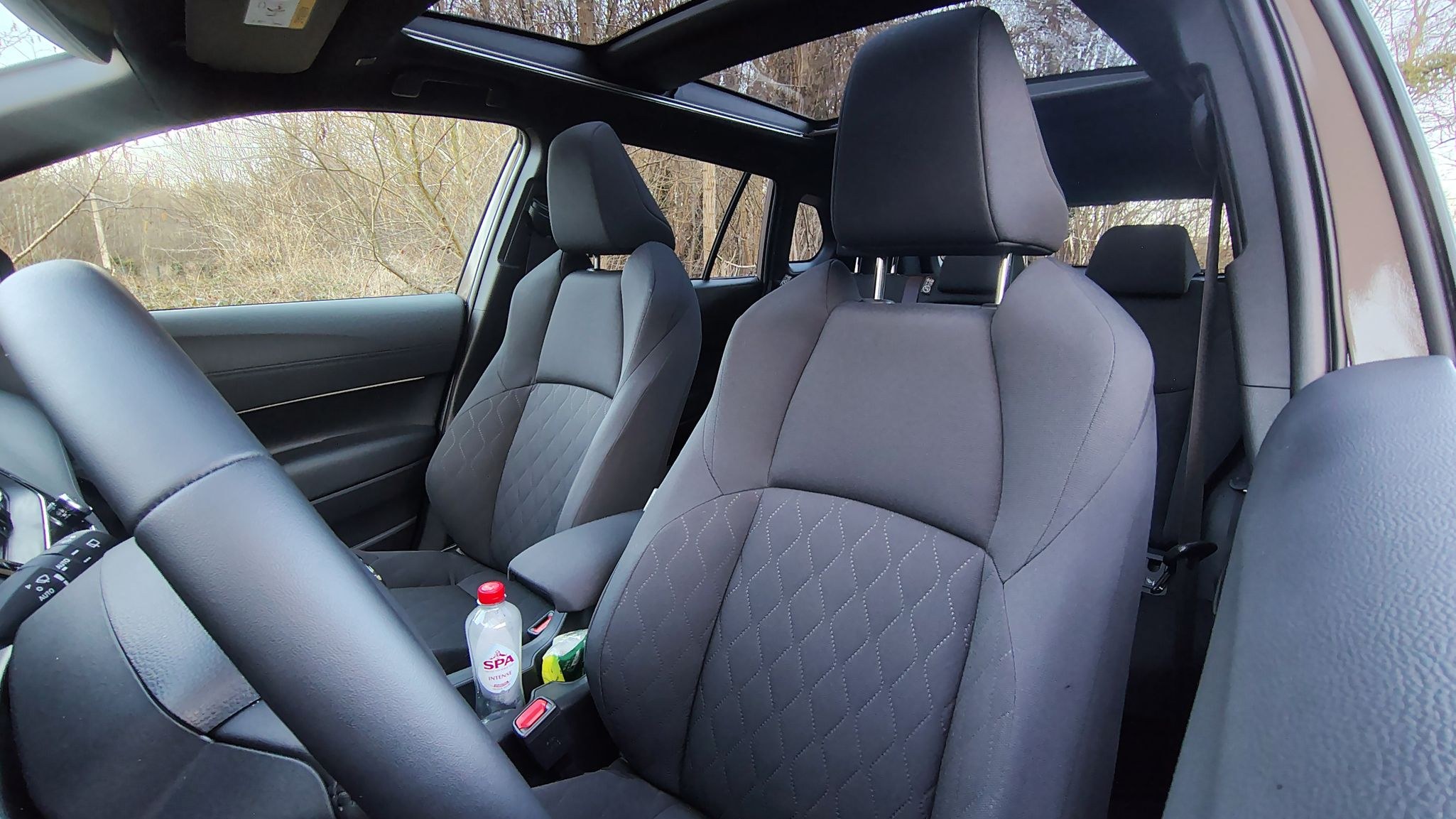
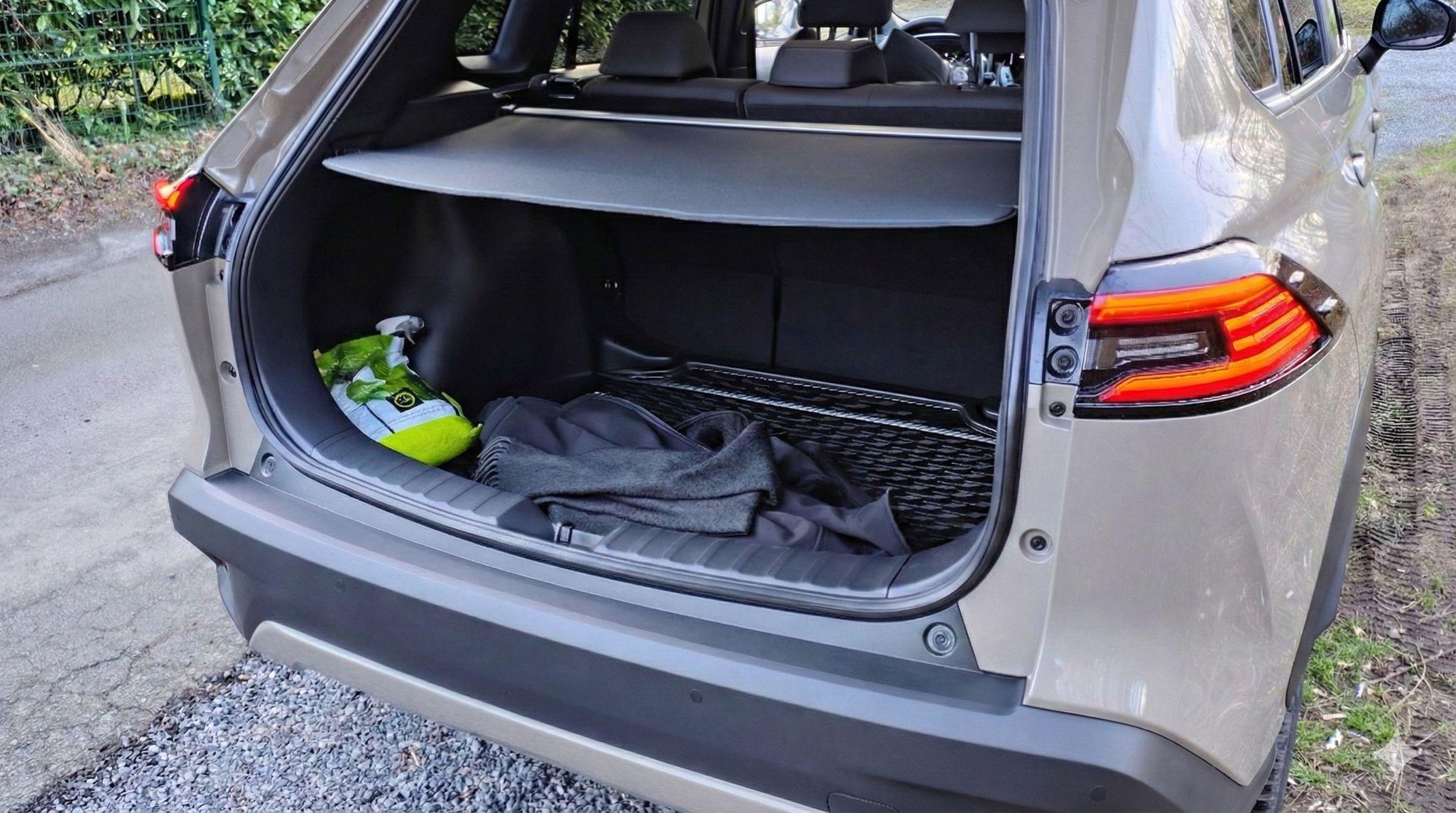
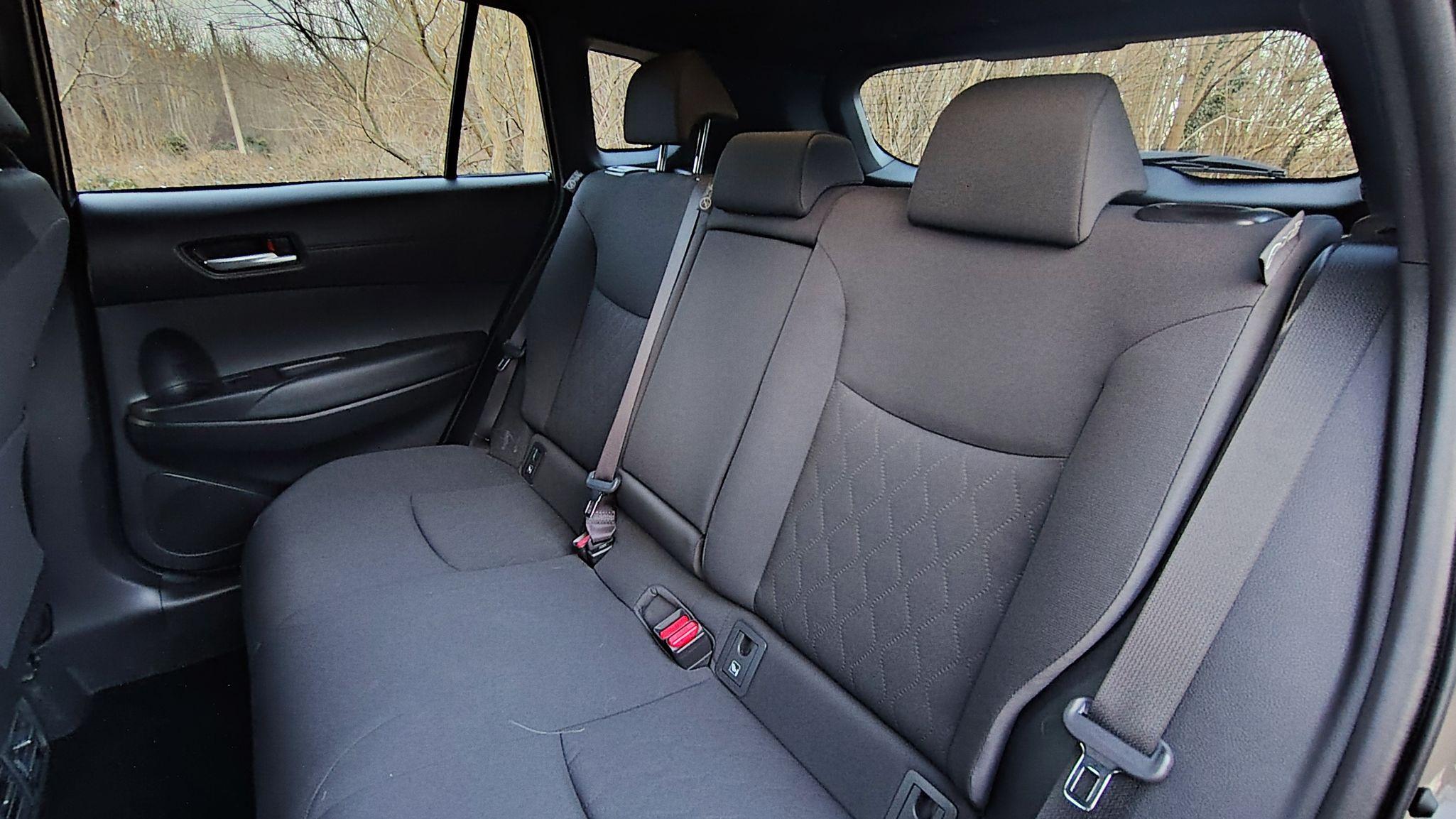
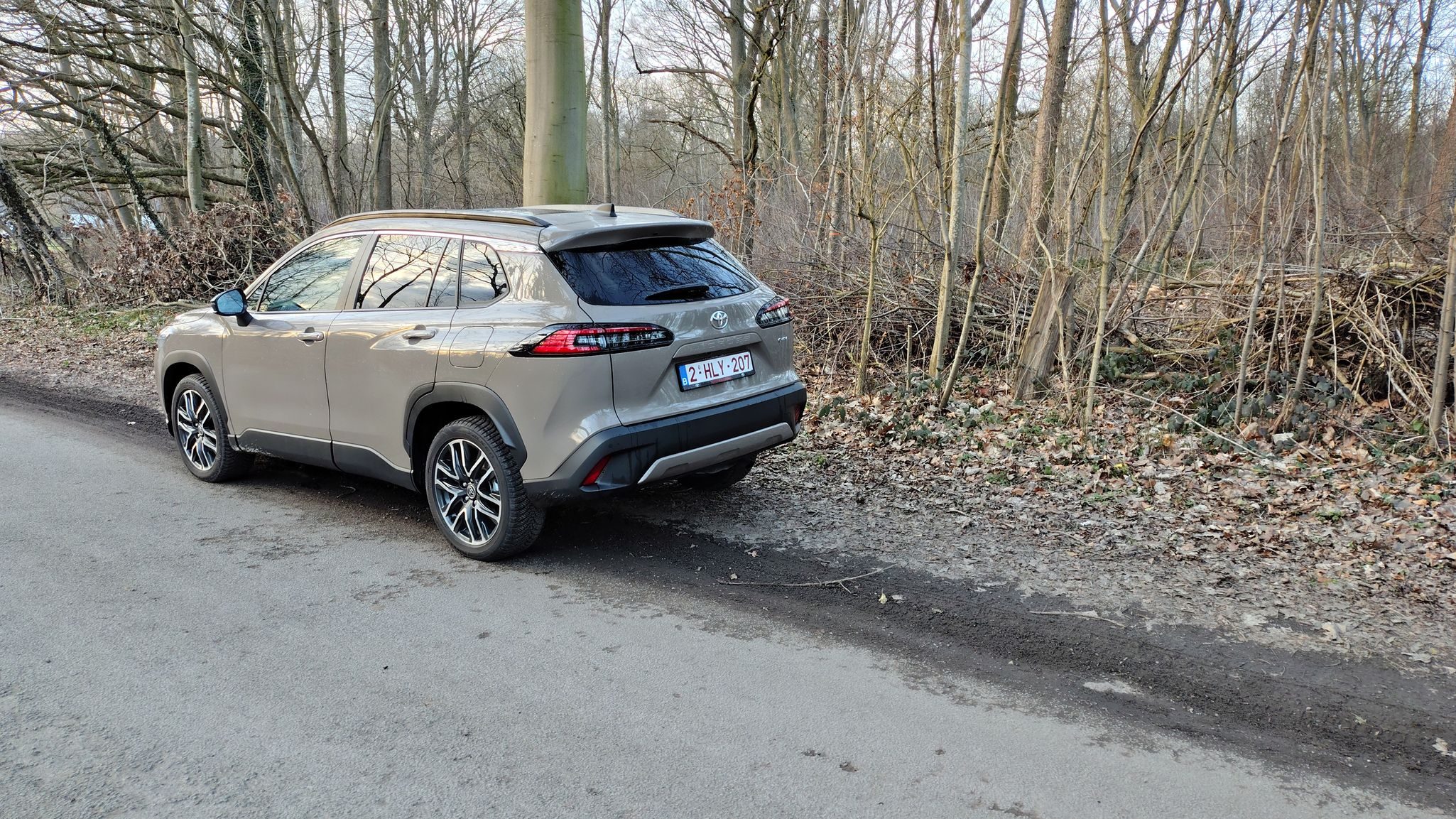
The finish of our vehicle was "Style". Apparently, black style. Because it's dark. The dashboard plastics look foamed, but aren't always. Admittedly, there's some piano black on the gear selector. But the whole thing lacks flavor. Yet it's well put together. Nothing sticks out. There's no lack of storage space up front. The rear, on the other hand, is a desert. The boot has a load volume of 473 l under the luggage cover for a car 4.46m long. Mind you, with the 2-liter engine, this will be less, especially with all-wheel drive (390 l). Fold down the rear bench, designed for 2 adults despite the central seat, and the load volume rises to over 1400 l, without a flat floor.
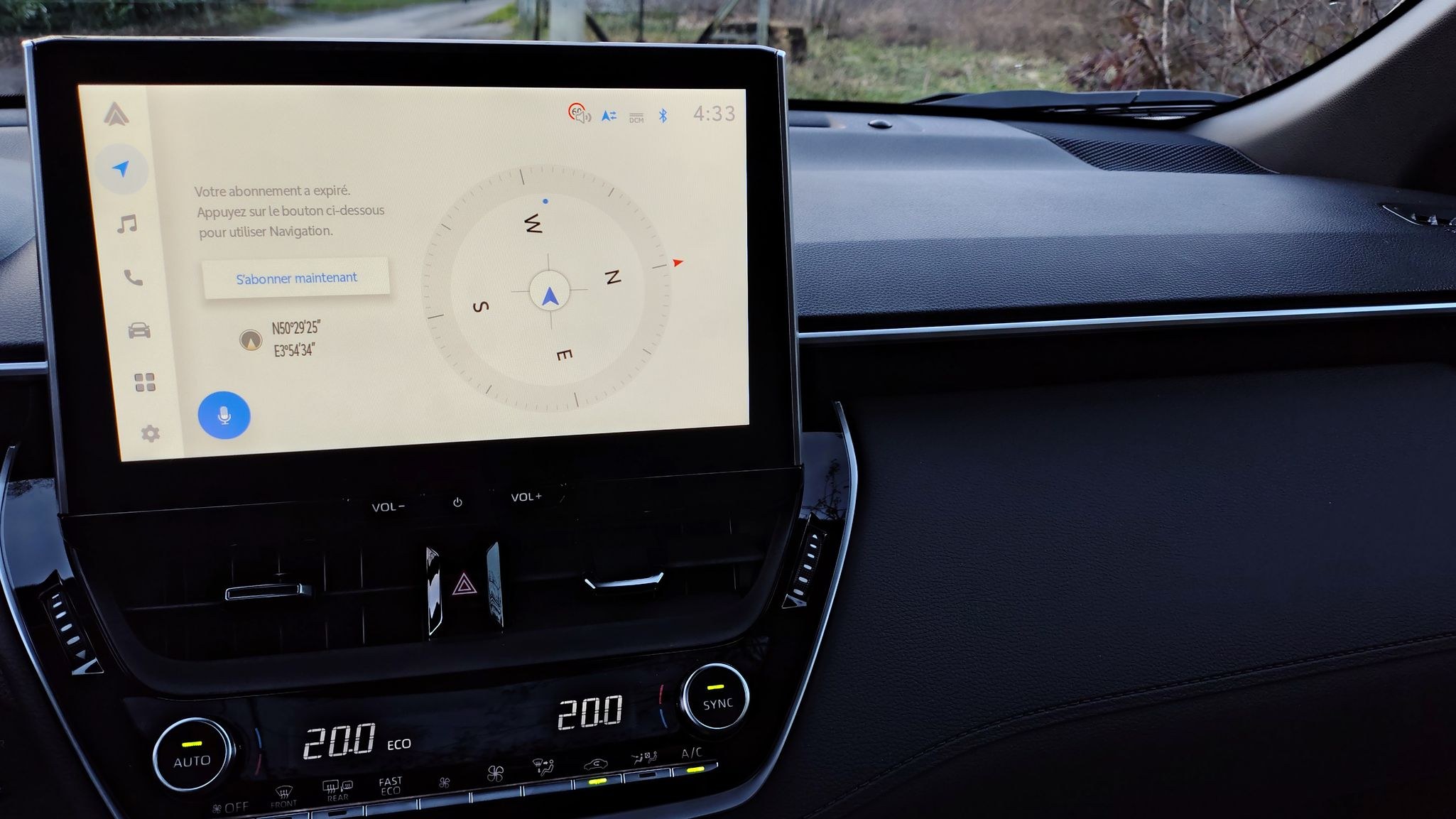
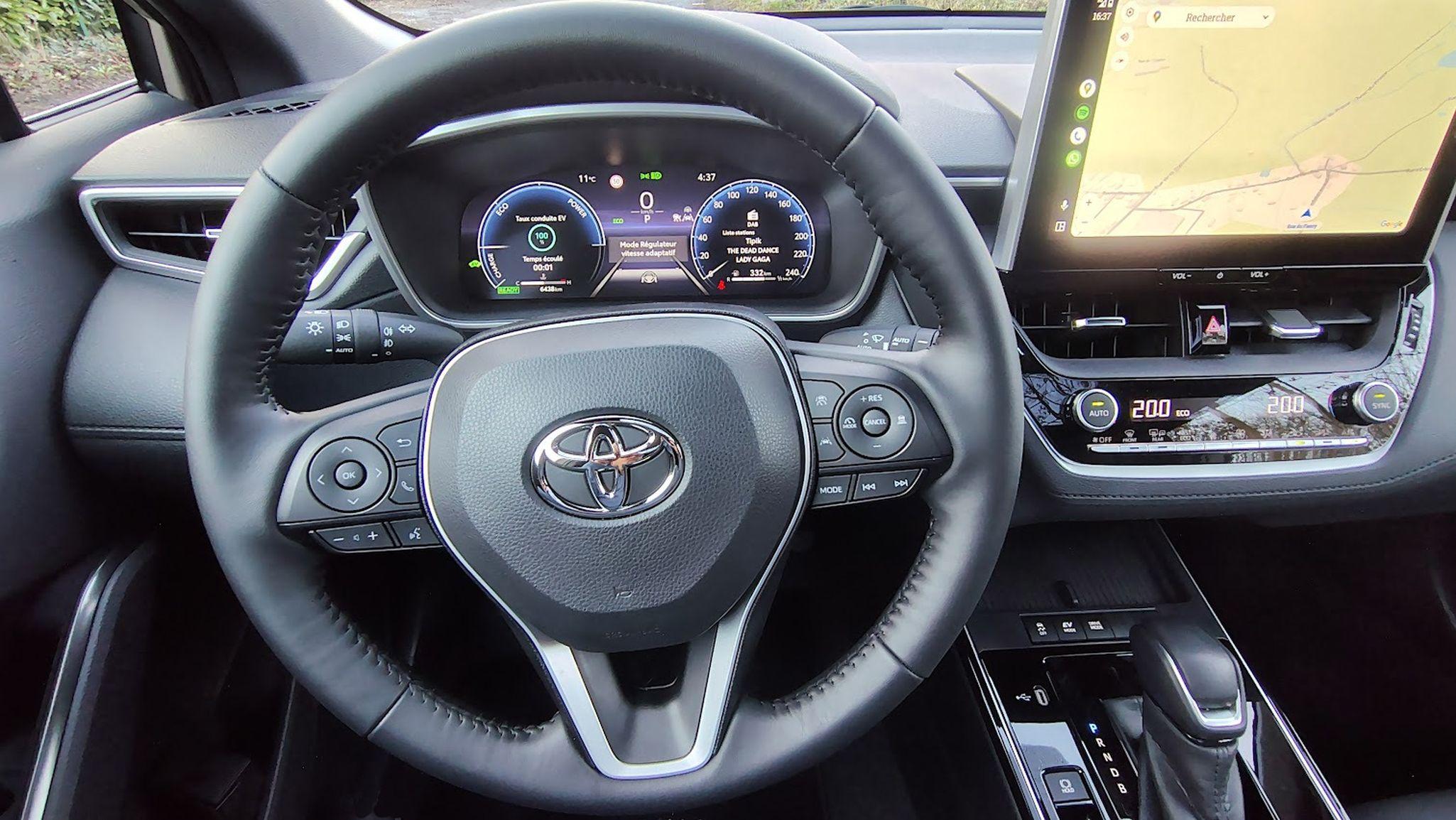
Ergonomics are decent. All the essentials can be done from the steering wheel. Despite the large 10.5-inch screen, there are still good old-fashioned buttons for air conditioning and audio volume. There are also physical controls at the foot of the console for driving mode, forced electric drive and ESP cut-off. The same goes for the handbrake and for holding the brake on side-start. For the heated seats, the buttons are a little out of reach between the P-R-N-D-B selector and the cup holder. The heated steering wheel is also lost to the left of the dashboard, near the activation of the large automatic headlights and the opening of the electric tailgate. Note that to refuel, you must first pull the lever on the floor alongside the driver's seat. And to turn off the unbearable speed alert? Well, by surfing the dashboard menus via a thumbwheel on the steering wheel (which is a pain and impossible to do carefully while driving) or via the 60 traffic sign icon on the screen. Unless you've paired your smartphone with Android Auto or Apple CarPlay. In that case, you first have to return to the manufacturer's screen via the pairing menu, before you can cut the chit at ISA. Another peculiarity: navigation requires a subscription. What's for more, it's best to put your car in the MyToyota app's virtual garage to get the most out of the car's on-board and off-board functionalities.
Pricing
In 2026, the Toyota Corolla Cross 1.8 HEV will cost around €40,000. In Belgium, the Style version tested here starts at €41,550. Just add the Argile Brown metallic body color at €900. This brings the total price to €42,450 (with factory tires, not the 4-season ones in this test). Excluding regional road taxes, of course. In the Grand Duchy of Luxembourg, the same Corolla Cross Style costs €43,027!
In France, there's nothing to pay, since the Corolla Cross is not distributed by the Hexagone network... In Switzerland, we'll go for the Corolla Cross Trend at CHF 40,400 with the right color. In the Netherlands, the Toyota Corolla Cross Dynamic in Mud Bath Metallic costs €45,994. This model is not available in the UK either.
The verdict
The fantastic thing about Toyota is that it manages to seduce without bling. It's not luxurious on board, but it's not shabby either. It feels solid, with flawless assembly. A car built to last, with ergonomics that still emphasize physical controls. It's simple to understand. The ride isn't exhilarating, but it's reassuring. What's more, its engine (code 2ZR-FXE) with simulated Atkinson cycle (delaying intake valve closure) is renowned for its reliability. What's more, its fuel consumption is a welcome relief for family budgets, especially on routes around towns and small villages. And as the fuel tank is rather modest, the expenditure alert will quickly light up on the dashboard and in your head.
There are a few imperfections. As long as there are buttons everywhere, why not include one to cut out the speed alert, which is as inaccurate as ever? Without having to surf the menus or the screen. And then, of course, there's the musicality - if you can call it that - of the 1.8-liter engine under full load. Hybridization is great in town and for leisurely driving through fields and forests, but when overtaking and relaunching, especially on the freeway: sorry! There is a solution, however, with a small budgetary effort: the Corolla Cross is also available in 2.0 HEV with a 152 hp 2.0-liter 4-cylinder engine that is undoubtedly much less flashy.
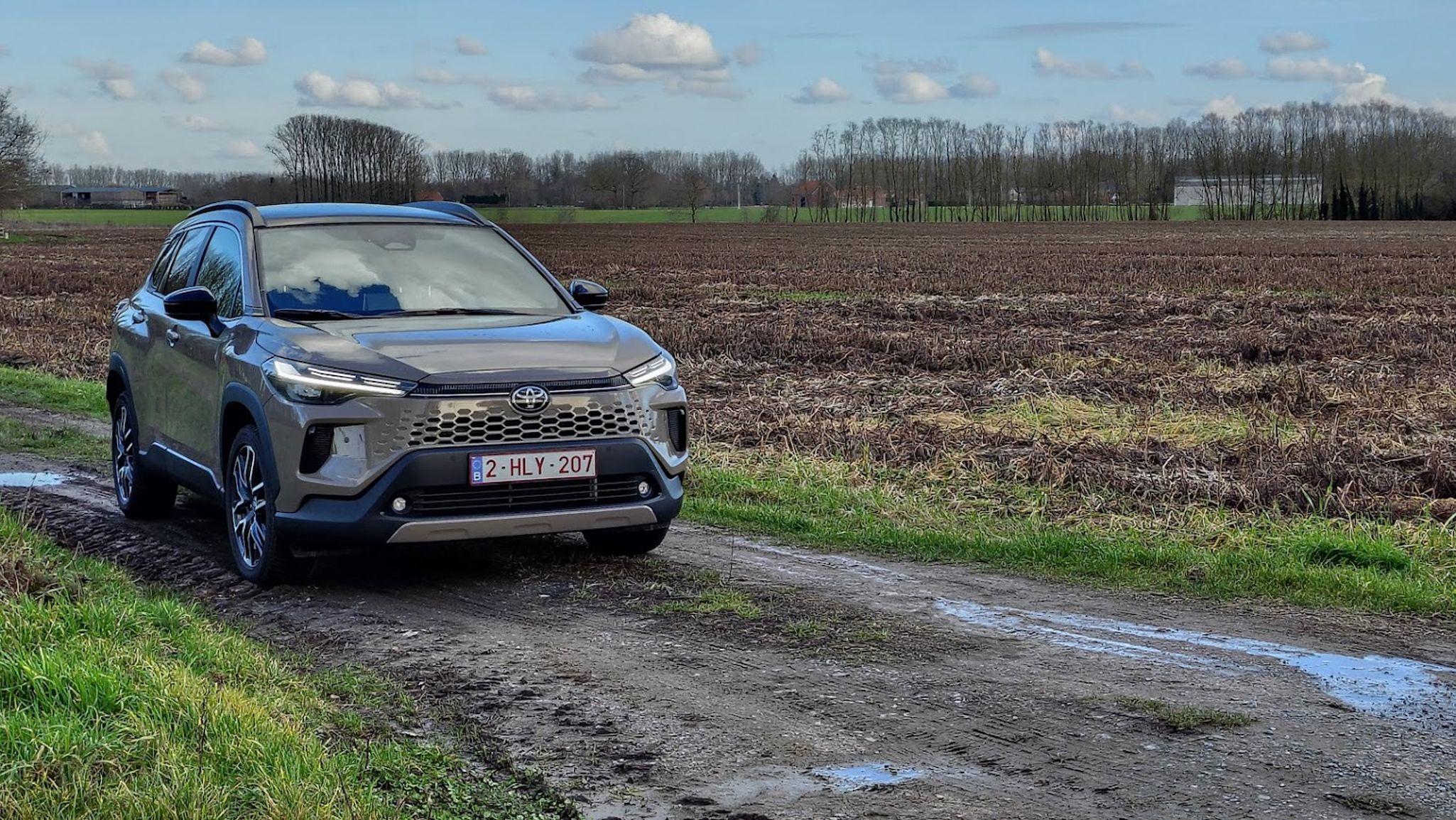
(Text and photos: © Olivier Duquesne)
Share: