
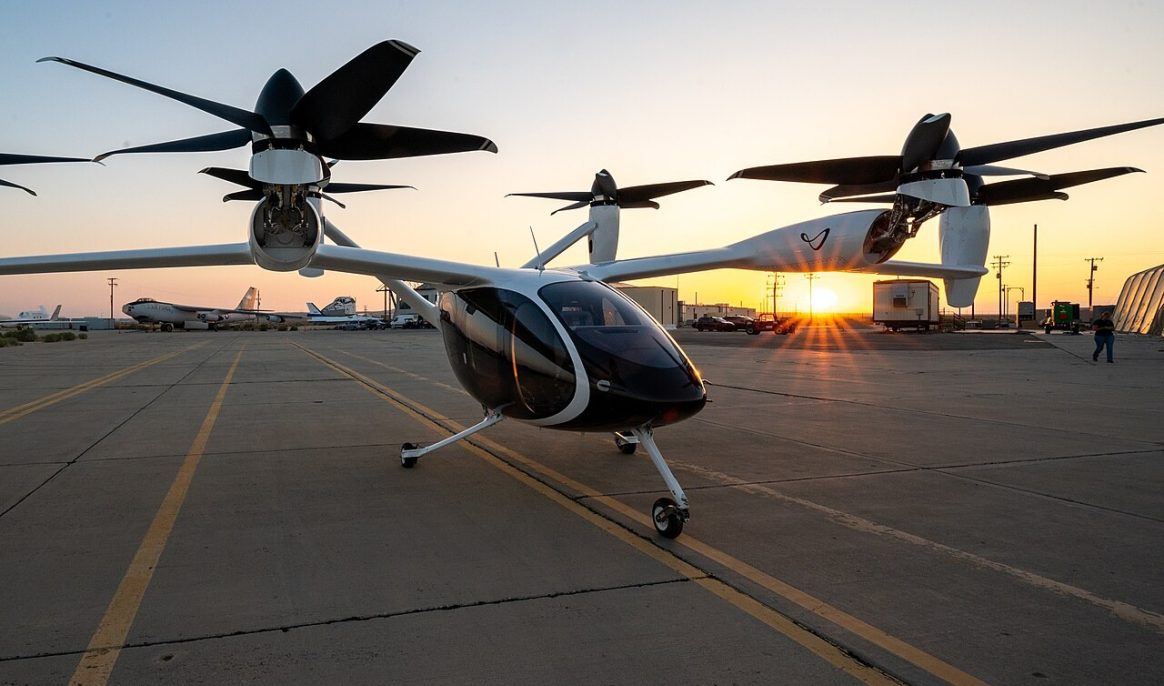
(Photo : © Harlan Huntington/U.S. Air Force)
-
Jun 03, 2026 11:30
Forget the monster traffic jams of Delhi or Mumbai: India is preparing to revolutionize urban travel with the arrival of electric air cabs. In a country where 60 to 90 minutes by car can be reduced to just 7 minutes by air, urban air mobility (UAM) is no longer science fiction.
The key to this revolution? eVTOLs (electric Vertical Take-Off and Landing), an electric vertical take-off and landing aircraft capable of carrying 4 passengers over distances of up to 160km. Unlike traditional helicopters, these aircraft are 100% electric, silent and much more economical.
American company Archer Aviation has teamed up with InterGlobe Enterprises (which supports India's leading airline IndiGo) to launch an air cab service in India. The Midnight eVTOL aircraft can carry 4 passengers plus a pilot, over a maximum distance of 161km. Travel time is a striking 7 minutes, compared with 60 to 90 minutes by car. The estimated price is between $36 and $48, more expensive than high-end car-sharing ($12-18), but the planned fleet comprises 200 aircraft at a billion-dollar investment. India will be Archer Aviation's first international market following New York.
India was obviously not chosen by chance. The Indian subcontinent represents an ideal terrain for eVTOLs. India's megacities are among the most congested in the world, with an urban population that continues to grow massively. Local investments are significant: IndiGo Ventures has just invested in eVTOL startup Sarla Aviation, a sign of its early positioning in urban air mobility. Strategic partnerships are multiplying, such as the one between Bengaluru International Airport Ltd and Sarla Aviation to explore eVTOLs. The objective is clear: air cabs should become a reality in India by 2026.
Urban air mobility is not a phenomenon limited to India. It is being boosted by the growing demand for faster transport, particularly in the Asia-Pacific region, which is set to experience remarkable growth, driven by investments in India, China, Singapore and Japan.
Despite the enthusiasm, several obstacles remain. Regulation is a major challenge, as legal frameworks are still under construction. Safety is crucial, with device certification a must. Infrastructure needs to be developed, including the construction of suitable vertiports. Acceptance by public authorities and public confidence remain two challenges to be met.
France and Europe are also investing heavily. Airbus has been developing UAM solutions since 2014. The UK, Germany and France are investing heavily in this technology. Companies such as Volocopter, Joby Aviation (photo) and Lilium are planning commercial operations over the next 3 to 5 years.
In India, a clear roadmap is already taking shape. Between 2023 and 2024, demonstration flights and investments had already been made. The launch of the first commercial services is scheduled for 2026. Towards 2030, large-scale integrated urban networks should emerge.
For the inhabitants of Delhi, Mumbai (Bombay) and Bengaluru (Bangalore), electric air cabs are no longer a distant dream, but a reality that is set to become reality by 2026. Between time savings, reduced pollution and a new-generation travel experience, the UAM promises to radically transform India's urban skyline.
(Sources: Team France Export, Fortune Business Insights, Haber.aero, OutlookBusiness, AeroMorning, Dubai Airshow)
An experimental electric vertical takeoff and landing (eVTOL) aircraft from Joby Aviation, Inc. is parked on the taxiway after a ground test at Edwards Air Force Base, California, on September 20, 2023. (Photo: © Harlan Huntington/U.S. Air Force)
Share: