-
Jan 26, 2026 18:00
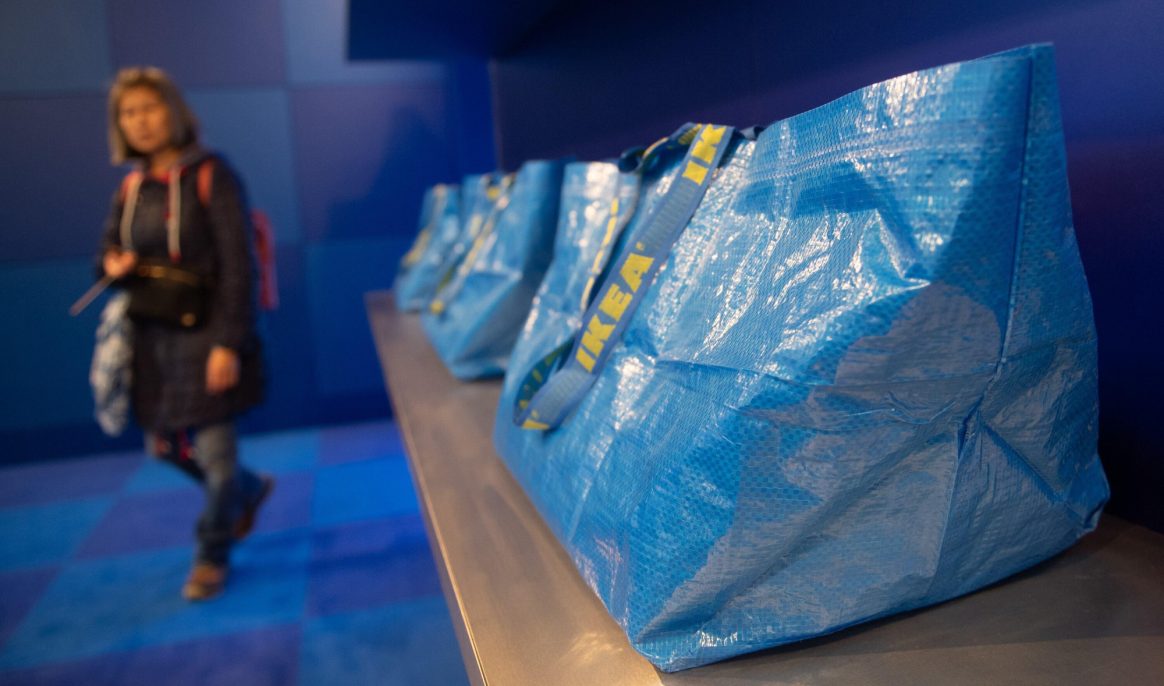
In the trunk of your car, in the pantry, in a closet, under your bed. We're even been told that some keep it under lock and key, you never know when someone might take it from you. We're talking about Ikea's iconic Frakta, the famous maxi bag made of recyclable polypropylene in that unmistakable blue color. A must for shopping at Ikea and far beyond: how handy is Frakta when moving house?
Why are we talking about it? Because the Ikea Frakta bag has retired her after 30 years of loyal service. It's going straight to the Swedish brand's attic, because as we know, the life of true rock stars is short but sweet and filled with global successes.
Around the world, the identity of this bag has gone far beyond cash registers of megastores. It has become an object in our daily lives and more than that: it has inspired designers and creators and ensured that everyone, and we mean everyone, has the same identical object lying around somewhere in their house (after the Billy bookcase, of course).
In short, entirely in line with marketing rules, the iconic blue bag is being removed from the Ikea range this spring, bringing an era to an end. Are we ready to say goodbye?
How did Frakta come into being?
Frakta's story begins in the 1960s, when Ikea began selling more and more small home accessories. It soon became clear that there was no practical way to transport them out of the stores: the baskets were too small and customers walked around with arms full of stuff. Being too much to carry, customers often left some of their purchases behind. Ingvar Kamprad, founder of IKEA, therefore decided that a large, sturdy and user-friendly bag was needed.
The idea took shape in 1986. Kamprad and purchasing manager Lars Göran Peterson found a manufacturer in Taiwan that used polypropylene, the same material used for rice bags: light, waterproof and extremely strong. The bag had to be able to carry up to 50 pounds. To test this, so the story goes, a woman that weighed about 50 pounds climbed into the bag and was lifted with a person holding one of the handles on either side. It didn't tear: the bag was approved.
This is how the first version was born, in yellow. But soon a problem surfaced: at the checkout, no one could distinguish between bags already paid for and bags still to be paid for. The solution was to create a second version of the bag, a blue one, which was meant to be sold. Thus the Frakta was officially born in 1989: the big blue bag we all know today.
The name is no accident: in Swedish, 'frakta' means 'to carry goods'. And that's exactly what it was made for. Over time, however, the bag has expanded far beyond its original function and become a multipurpose object: it is used by fruit pickers, families, sports coaches, spontaneous movers and even owners of large dogs in New York, when a law dictated that they were only allowed on public transportation in a bag.
Frakta has also become a creative symbol. Designers and artists have reinvented their in limited editions, as in the 2016 collection YPPERLIG, in Virgil Abloh's MARKERAD, or in the rainbow version STORSTOMMA, whose proceeds went to UNHCR in support of LGBTQ+ refugees. Even luxury fashion has 'copied' its design: in 2017, a fashion house presented a blue leather bag unmistakably reminiscent of Frakta, resulting in viral reactions. Ikea responded with humor: "Nothing beats the flexibility of a big blue bag."
To help recognize the original, Ikea even published a guide: if it closes, if you can fold it down to the size of a purse, if you can wash it with water and if it costs almost nothing, then it's a real Frakta.
Its success and our psyche
Today, millions of copies of Frakta are sold every year, all over the world. Its success perfectly embodies the Ikea philosophy: functional, sturdy, affordable, democratic. It's not a luxury item, but it solves real problems. And perhaps that has been its greatest strength: in a world of short-lived products, Frakta appears as a symbol of intelligent simplicity. A bag for everyone, that lasts a long time and shows that sustainability, practicality and design can really go hand-in-hand.
And perhaps Frakta's triumphant story also tells us something about ourselves: our brains love simple, recognizable, reassuring icons. Something everyone in marketing knows through and through: over time, we have been trained to seek identity, connection and even emotional comfort in objects.
We become attached to a bag, a brand, a logo, as if they can give us something to hold on to. It's marketing's triumph disguised as affection. Icons arise not only because they're useful, but because we need ready-made symbols that are easy to recognize, that replace bits of meaning that we find increasingly difficult to find elsewhere. But that's another story.
Meanwhile, we will still keep Fraktas under our bed. Anxiously.
Source: IKEA
Share: