
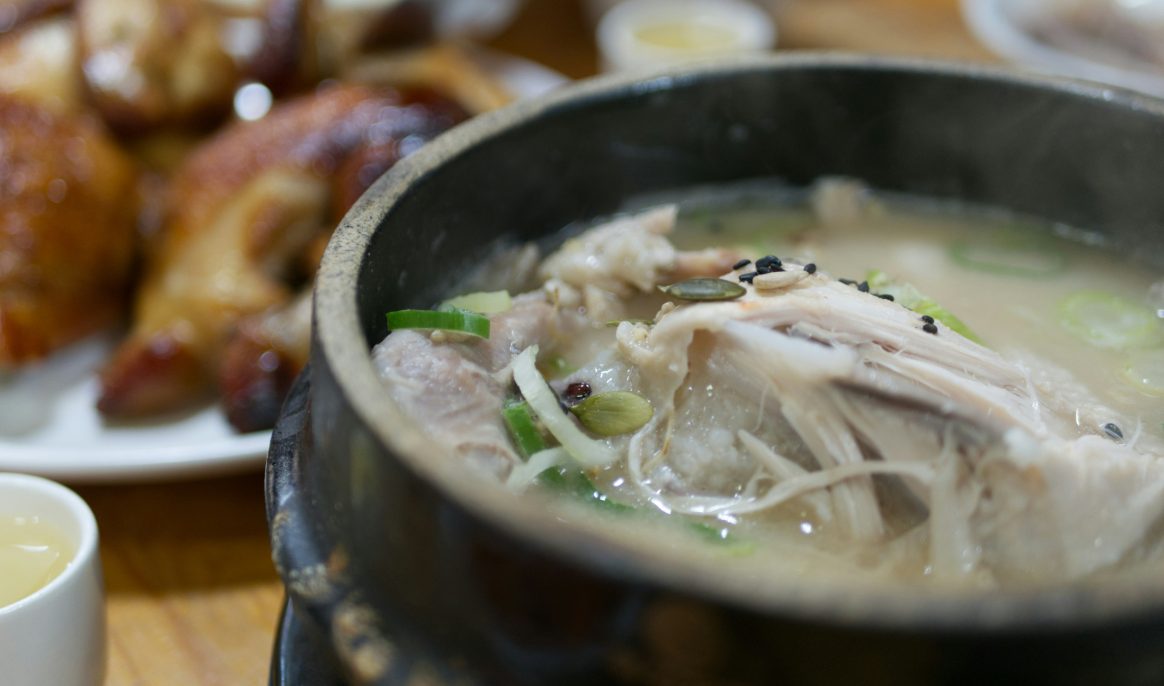
©Cyprien Delaporte via Unsplash - photo d'illustration
-
Jun 08, 2026 12:01
When the thermometer rises above 35 or 40 degrees (Celsius), the reaction in much of the world is almost automatic: we rush for iced drinks, chilled salads and light meals. In South Korea, however, the opposite is true. On the hottest days of the year, thousands of people sit down in restaurants to enjoy steaming ginseng chicken soup, served while still boiling.
At first glance, this seems like nonsense. Yet behind this habit lies an ancient philosophy that continues to influence Koreans' relationship with the summer heat. In South Korea, this method is called "iyeol chiyeol" (이열치열), an expression that can be translated as "fighting heat with heat". According to this approach, exposing the body to a controlled heat source helps restore internal balance and cope with high outside temperatures.
The idea has its origins in traditional East Asian medicine, which sees well-being as the result of a balance between opposing energies and forces. When the heat outside becomes excessive, the body loses energy through perspiration and fatigue. Eating a warm, nourishing food is therefore be a way of replenishing the body's resources and promoting a better ability to adapt to climatic conditions.
Soup, the symbol of Korean summer
The dish that best embodies this philosophy is "samgyetang", a soup made with a whole cockerel stuffed with glutinous rice, garlic, jujube and ginseng. The whole thing simmers slowly until a rich, fragrant broth is obtained.
Paradoxically, "samgyetang" is not considered a winter dish, but one of the quintessential summer dishes. Traditionally, this soup is eaten during "sambok", the three hottest days of the Korean calendar, when sweltering heat and humidity reach particularly high levels.
On these days, specialized restaurants often see long queues of customers looking for their bowl of steaming broth.
Beyond tradition: what science says
The Korean habit may seem counter-intuitive, but some studies have pointed to a possible physiological basis. Research from the University of Ottawa, cited by several food experts, has shown that drinking hot liquids can increase perspiration and promote the dispersion of body heat through the evaporation of sweat. Under certain environmental conditions, this mechanism can provide a more effective cooling sensation than that provided by a very cold drink.
Naturally, the benefit depends on a number of factors, including humidity levels and the ability of sweat to evaporate properly. This doesn't mean that a scalding hot soup is always the ideal solution, but it does help explain why different cultures have developed seemingly opposite strategies for coping with the heat.
A different concept of well-being
For many Koreans, "samgyetang" is not just a meal: it's a real tonic, associated with the idea of recovering energies lost during the summer. Ginseng, in particular, occupies a central place in the country's culinary culture and is traditionally linked to vitality and physical resistance.
The logic is not to seek immediate relief from the heat, but to help the body react more effectively to climatic stress. A significant cultural difference from the Western approach, which tends to favor rapid cooling through cold drinks, air conditioning and light meals.
A cultural lesson that goes beyond the plate
The Korean habit of eating hot soup in midsummer shows that the relationship with the climate is also a cultural construct. What might seem absurd in Europe is seen in Korea as a common-sense practice handed down from generation to generation.
More than just a gastronomic curiosity, "samgyetang" tells of another way of approaching well-being: not opposing nature, but seeking to enter into resonance with it. And so, while we struggle against the 40-degree heat with slushies and iced drinks, some people in Seoul face the same heat over a steaming soup, convinced that the best way to beat the heat is to walk through it.
Share: