
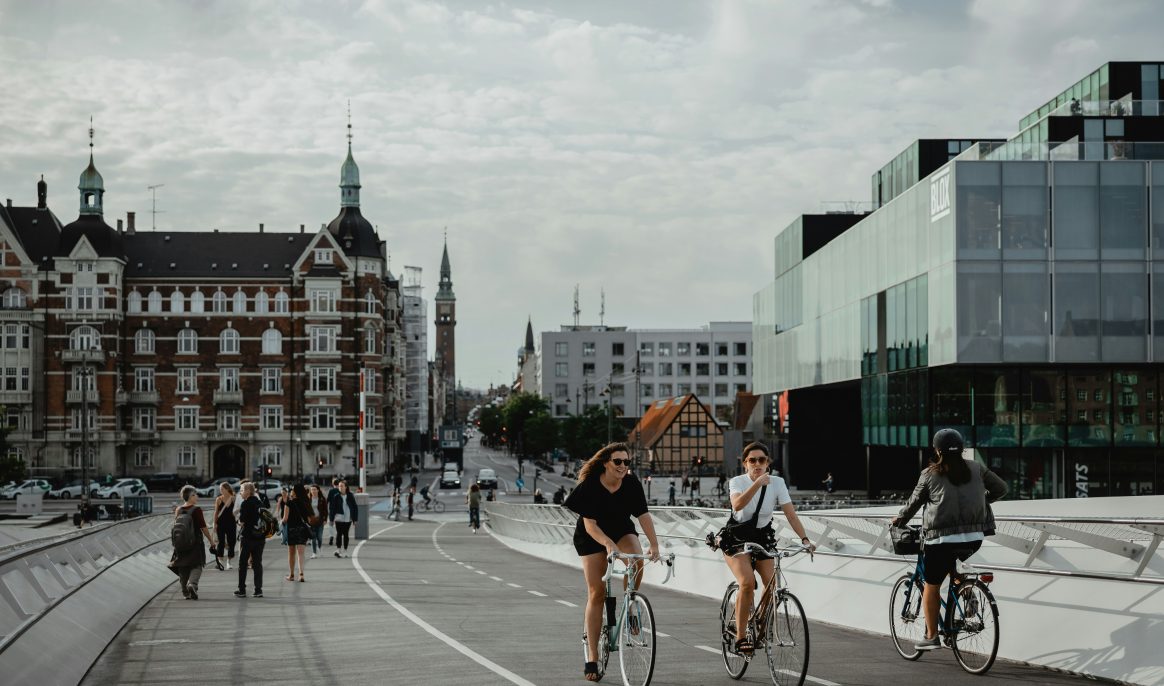
©Febiyan via Unsplash
-
Jun 12, 2026 09:21
Copenhagen remains the happiest city in the world according to the 2026 Happy City Index, thanks to its efficient services, sustainability, and quality of life.
For the second consecutive year, Copenhagen is the happiest city on the planet. This is confirmed by the Happy City Index 2026, the international ranking that assesses urban well-being through dozens of indicators related to quality of life, services, health, sustainability, mobility, and the economy.
The Danish capital takes first place with nearly 7,000 points, ahead of Helsinki and Geneva. Once again, Northern Europe dominates the rankings, confirming an urban model that prioritizes citizens’ well-being, the efficiency of public services, and environmental stewardship.
Why Copenhagen Remains the Happiest
The Happy City Index does not simply measure a city’s level of wealth. The survey takes into account 64 indicators divided into six broad categories: citizens, governance, environment, economy, mobility, and health.
What sets Copenhagen apart is the combination of efficient transportation, green spaces, accessible services, environmental sustainability, and a high level of trust in institutions. All these elements contribute to making daily life simpler and more enjoyable.
Behind the Danish capital are Helsinki (Finland) and Geneva (Switzerland), followed by Uppsala and Tokyo, the only Asian city in the top 5.
The 10 Happiest Cities in the World
According to the 2026 Happy City Index, the global top 10 consists of:
- Copenhagen (Denmark)
- Helsinki (Finland)
- Geneva (Switzerland)
- Uppsala (Sweden)
- Tokyo (Japan)
- Trondheim (Norway)
- Bern (Switzerland)
- Malmö (Sweden)
- Munich (Germany)
- Aarhus (Denmark)
A result that confirms the dominance of cities in Central and Northern Europe, considered an international benchmark for quality of life and urban sustainability.
How the Happy City Indexis calculated
The 2026 edition analyzed 251 cities worldwide. Particular attention was paid to aspects related to physical and mental health, increasingly regarded as fundamental elements of urban well-being.
Hundreds of international experts and researchers collaborated on the study, with the goal of identifying cities that succeed in guaranteeing their residents not only economic prosperity but also a better quality of life in the long term.
The picture that emerges is clear: the happiest cities are not necessarily the largest or the wealthiest, but those that manage to strike a balance between development, sustainability, social inclusion, and efficient services.
Source: Happy City Index 2026
Share: