
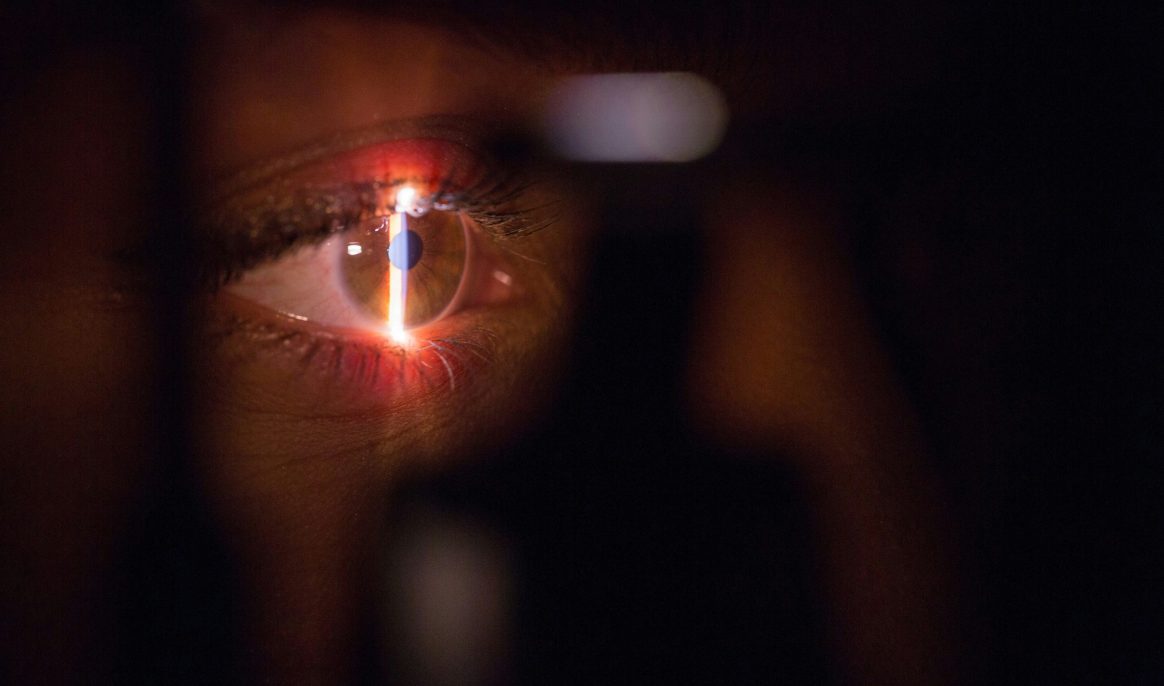
©Brands&People via Unsplash - photo d'illustration
-
Sep 10, 2026 11:00
High myopia is a condition that can increase the risk of eye complications such as retinal detachment, glaucoma and premature cataract.
Today, refractive surgery offers advanced and personalized solutions, but in cases of severe myopia, ICL intraocular lens implants often represent the safest and most effective alternative to laser treatment, thanks to a conservative, reversible approach offering excellent quality of vision.
High myopia, also known as pathological myopia, is not simply a pronounced visual defect, but a complex clinical condition. Excessive elongation of the eyeball exposes delicate structures such as the retina, macula and vitreous body to significant risks, making regular ophthalmological checks essential.
In this context, although modern refractive surgery offers increasingly personalized solutions, laser is not always the most appropriate choice. For patients with severe myopia, ICL intraocular lenses have emerged as the safest, most advanced and effective alternative.
The main risks associated with severe myopia
In cases of severe myopia, the eye undergoes structural alterations that can lead to the onset of ocular complications. Excessive elongation of the eyeball increases the tension exerted on the retina, which can lead to peripheral degeneration, tears or even retinal detachment in some patients.
In addition, people with high myopia are more predisposed to developing glaucoma, early cataracts and macular pathologies. This is why regular eye examinations are essential, even when optical correction seems to have stabilized.
Refractive surgery: a safe, cutting-edge solution
Over the last few decades, refractive surgery has achieved unprecedented levels of precision and customization. Proven laser techniques, such as LASIK, FemtoLasik and PRK, act on the curvature of the cornea to correct visual faults, offering patients with mild to moderate myopia almost immediate functional recovery.
However, the laser surgery approach cannot be applied to everyone. In the presence of high myopia, thin corneas or structural anomalies, removal of corneal tissue may be contraindicated, making it necessary to evaluate alternative, more conservative solutions.
ICL implants: the ideal alternative for severe myopia
ICL implants (or ICL lenses) have revolutionized the treatment of high myopia. These ultra-thin lenses are implanted inside the eye without removing the natural crystalline lens.
Unlike lasers, this procedure does not act on the cornea, making it possible to correct very high degrees of myopia while maintaining excellent visual quality and preserving the ocular structure.
Another advantage is that ICL lenses do not disturb the tear film, which considerably reduces the risk of dry eyes. The procedure itself is fast, minimally invasive and, if necessary, reversible.
For all these reasons, ICL implants are today considered by many specialists as one of the most relevant solutions for patients with high myopia, who are not eligible for laser surgery.
Ultimately, high myopia should not be considered solely as a problem of optical correction, as it can increase the risk of major ocular complications. Fortunately, advances in refractive surgery and the development of techniques such as ICL lenses mean that we can now offer increasingly safe, effective and personalized solutions to improve patients' visual quality.
Share: