
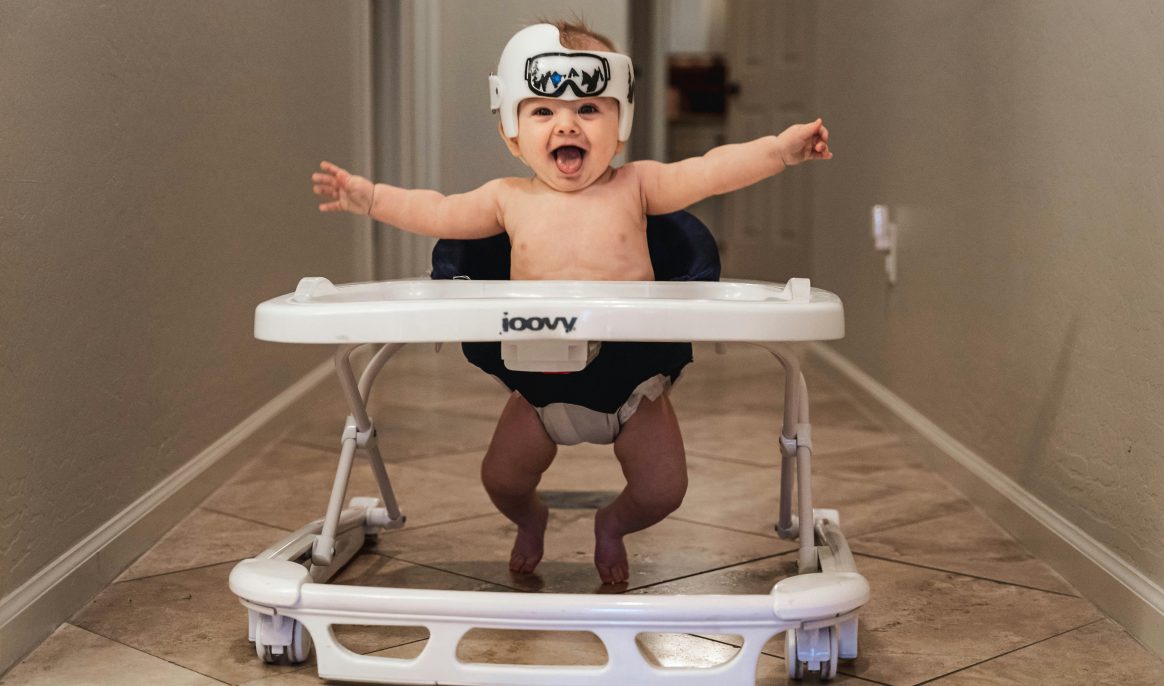
©Jimmy Conover via Unsplash - photo d'illustration
-
May 28, 2026 15:19
A study by the Santa Lucia IRCCSFoundation shows that the first autonomous steps can reorganize the nervous system in children with cerebral palsy: intervening in the first two years can change motor development.
On the treadmill, he moves his legs slowly, while small sensors applied to his skin record every movement. Mattia (not his real name) observes the doctors and cameras that follow him as he exercises with curiosity. For him, these steps are not just a physiotherapy exercise: they represent an immense victory. Behind the steps he takes is the work of researchers at the Santa Lucia IRCCS Foundation in Rome, engaged in a study that could change the way we approach infantile cerebral palsy from the very first months of life.
The research is being carried out in the Neuromotor Physiology Laboratory, headed by Professor Francesco Lacquaniti, in collaboration with the Roman institution's Child Neurorehabilitation Center. The aim was to understand what really happens in the brain and muscles when a child takes his or her first independent steps.
Why the first two years are crucial
Infantile cerebral palsy is a neurological pathology caused by early damage to the developing nervous system. It can compromise posture, balance and the ability to move, with widely varying degrees of severity. In many cases, walking appears late; in others, it never develops without aids and assistance.
This is precisely where this new study comes in. Researchers have observed that the transition from assisted to autonomous walking represents not just a stage of growth, but a true phase of neurological reorganization. Walking stimulates the nervous system to build new motor patterns, making muscular activity more complex and better coordinated.
According to specialists, there is a crucial window of time: the first two years of life. During this phase, the brain and spinal cord are still highly plastic, an asset that makes neurorehabilitation far more effective.
The study of 34 children and the signals recorded by the electrodes
Researchers analyzed the walking patterns of 34 children with infantile cerebral palsy, comparing them with those of neurotypically-developed children of the same age. Using non-invasive sensors and electrodes, they monitored 18 muscles of the lower limbs, recording the behavior of the neuromuscular system in the days immediately following the first autonomous steps.
The study showed that many children had primitive motor patterns, similar to those of newborns, before they were able to walk independently. However, after the onset of autonomous walking, new muscle activation patterns emerged, as did a more sophisticated organization of spinal circuits.
Professor Germana Cappellini, one of the project's key figures, has been working with premature infants and patients at neurological risk for years. The intuition that guided the team was simple yet revolutionary: not just to study walking once it has been acquired, but to accompany children precisely as they learn to take their first steps.
The new frontier of infant neurorehabilitation
For the specialists at the Santa Lucia Foundation, the most important result is to have demonstrated that movement itself can contribute to the maturation of the nervous system. This discovery paves the way for early, personalized rehabilitation programs based on objective data. The next objective will be to extend this work to other motor development disorders, seeking to identify early signals as early as the first six months of life. Because, in some cases, one small step can really change the future.
Source : Fondazione Santa Lucia
Share: