
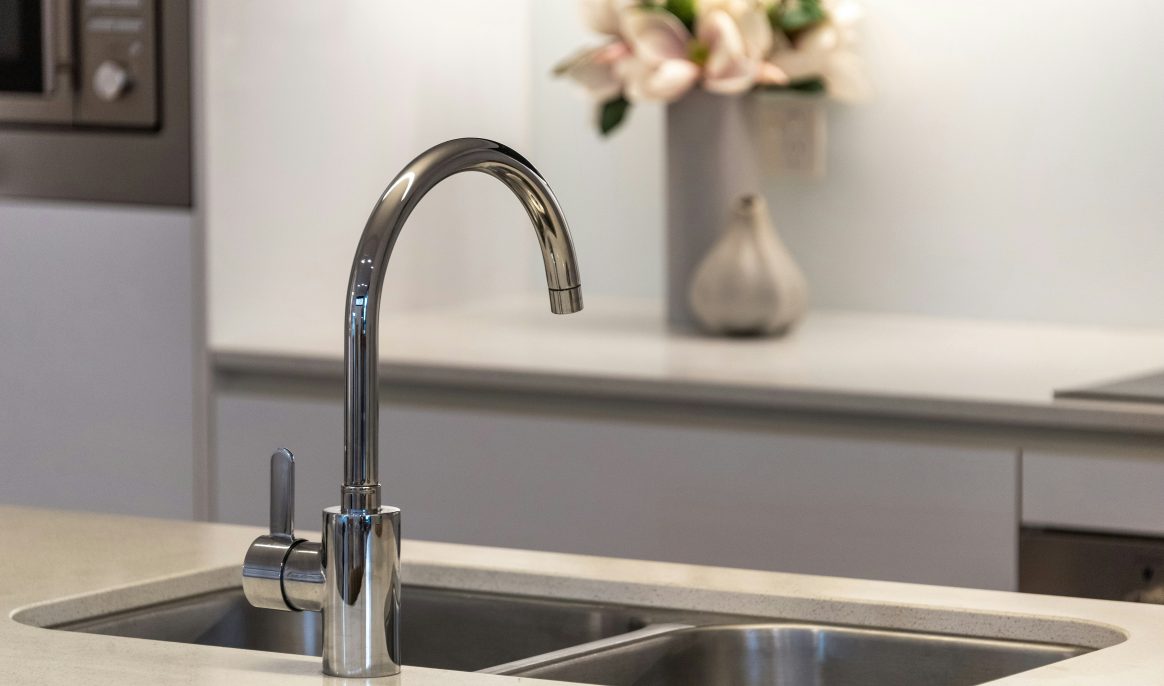
©Steven Ungermann via Unsplash
-
Jul 11, 2026 09:21
A faucet covered in white spots is a bit like a dirty windshield: it’s annoying, and we always tend to put off cleaning it. Here’s a tip for getting rid of them without taking anything apart.
We love seeing stainless steel fixtures shine… until limescale sets in. It takes just a few weeks for those sparkling faucets to become covered in white spots. And in areas with very hard water, the situation worsens rapidly.
Descaling is the very definition of that little chore we keep putting off until tomorrow—until the buildup sets in for good, eventually dulling the surfaces, reducing water flow, and sometimes even causing the faucet to jam. Fortunately, there’s no shortage of simple solutions, and none of them require a plumber’s license. So here’s how to give your faucets a new lease on life.
Why does limescale form, and why do you need to do something about it?
Limescale is like that guest who shows up unannounced. Every time water flows through, tiny particles settle, especially around the aerator and in damp areas—a situation that doesn’t seem like a big deal at first. Then, little by little, the faucet loses its shine, the water flow becomes erratic, and in some cases, the handle even becomes difficult to turn.
This problem is usually caused by heavy household use (think of a home where the faucet runs all day) and a few weeks of neglect. That’s exactly what allows the buildup to accumulate and makes the room look neglected, even if everything else is clean. Remember: regular maintenance is your best defense—it’s better to act early than to have to make up for lost time later.
Natural solutions that really work
There’s no need to break the bank on expensive chemicals, because the most effective remedies are often the simplest. White vinegar, for example, is always a safe bet: when slightly warmed, it dissolves limescale deep down. Just soak a cloth in it, wrap it around the faucet, let it sit, and you’re done—effortlessly. Lemon also works very well, especially for a quick clean: rub the pulp directly onto the buildup, rinse, and the surface instantly regains its shine. Plus, it smells much better than vinegar—a detail that matters. Then there’s baking soda, which is perfect for gentle cleaning: mixed with a little water, it forms a slightly abrasive paste that loosens deposits without scratching.
Many people alternate between these three remedies, depending on how badly the surface is scaled. For the most stubborn areas, there’s just one rule: let it sit longer and be patient. An interesting alternative is citric acid, the active acid found naturally in citrus fruits and now sold in powder form for just a few euros. When dissolved in warm water, it breaks down calcium carbonate just as effectively as vinegar, but without that pungent odor, and it’s gentle enough for even the most delicate chrome finishes. One tablespoon in half a liter of water will suffice in most cases.
Simple habits to adopt every day
A series of regular steps that help keep limescale under control:
- wipe down the faucet after each use;
- wipe down the faucet with white vinegar once a week;
- clean the aerator every 3 to 6 months;
- avoid using harsh cleaning products;
- monitor the water flow to take action in time.
The tip that makes all the difference: cleaning without taking anything apart
And here’s the secret that makes all the difference. There’s a technique for cleaning the aerator without taking the faucet apart—the famous “bath”—and the principle is child’s play. Simply fill a small plastic bag (a balloon will work just as well) with water and citric acid (vinegar works just as well), then tie it around the faucet spout so that the end remains submerged, and let it sit for a few hours—or overnight for the most severe cases.
The acid will work directly on the limescale buildup until it dissolves the residue, even in the nooks and crannies that are hardest to reach by hand. The result? You’ll have a faucet aerator that’s practically brand-new—all without any tools, without having to unscrew and rescrew any threads, and without the risk of damaging the gaskets. In short, it’s the perfect shortcut to save precious time without making life too complicated.
Share: