
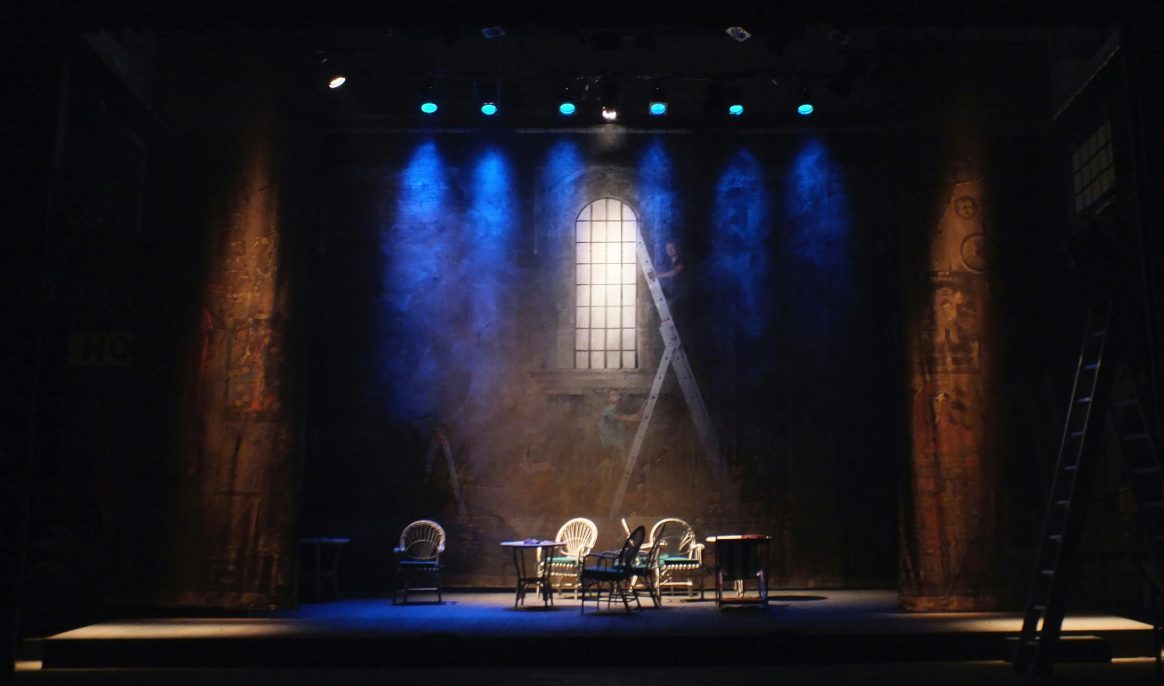
©stefano stacchini via Unsplash - photo d'illustration d'une pièce de théâtre
-
Jun 15, 2026 09:03
In Genoa, the Teatro dell’Arca is hosting an extraordinary inclusion project: inmates take the stage alongside Judge Giorgio Morando to give new meaning to their sentences, transforming the prison into a place of culture and hope.
Behind the high walls of the Marassi prison in Genoa lies a place where, for a few hours, the bars seem to give way to emotions. This is the Teatro dell’Arca, a unique institution born from the initiative of the Teatro Necessario association, which has for years used the performing arts as a tool for personal and social development for inmates.
The latest performance of "La Voce di Antigone" offered a moment of great emotional intensity when it was announced that one of the actors, just five days earlier, had completed his sentence and was officially a free man once again. Spontaneous applause from the audience transformed this news into a symbol of rebirth.
From a Dump to a Theater Open to the City
Ten years ago, this space was nothing more than a landfill inside the prison. Thanks to the Teatro Necessario project, it has been completely renovated and transformed into a theater that now hosts performances open to both authorized inmates and outside spectators. The original idea, conceived by founder Sandro Baldacci, was to create a genuine bridge between the prison and the city, tearing down—at least symbolically—the wall that separates those in detention from the rest of society.
Theater as a Tool for Reintegration
According to the organizers, theater represents a genuine educational necessity. Through rehearsals, exercises, and performances, participants discover skills they often did not realize they possessed, thereby learning discipline, mutual listening, and a sense of responsibility. In over twenty years of activity, the project has involved more than 500 inmates, engaged both as actors and in technical roles, while approximately 90,000 spectators have passed through the gates of the Teatro dell’Arca to attend the performances.
A judge takes the stage as well
Among the protagonists of the latest workshop is Giorgio Morando, a preliminary investigations judge at the Genoa court, who decided to participate directly in the theater troupe. His presence carries strong symbolic value.
The man who usually embodies judicial authority has, in fact, chosen to share the stage with the inmates to bring to life what the Italian Constitution assigns to punishment: a function of rehabilitation and social reintegration. According to the magistrate, the experience helps bridge the distance often felt between institutions and inmates by building a dialogue based on mutual understanding.
Antigone and the clash between law, conscience, and dignity
The chosen play, "La Voce di Antigone," addresses universal themes such as the relationship between state law, individual conscience, and human dignity. For months, the participants worked together, devoting many hours to rehearsals, learning to trust one another and collaborate without prejudice. In an environment where isolation and mistrust often prevail, theater thus becomes a space for sharing and personal growth.
A glimmer of hope in the midst of a difficult reality
The artistic experience takes place within a complex context. Prisons in Liguria continue to face overcrowding, issues related to living conditions, access to healthcare, and limited opportunities for work and reintegration. It is precisely for this reason that initiatives like that of the Teatro dell’Arca take on even deeper meaning.
For the participants, they offer a breath of fresh air, an opportunity to feel like individuals before being inmates. At the end of the performance, one of the actors summed up the project’s meaning in a simple yet powerful sentence: when he steps onto that stage, he feels truly free. A freedom that lasts only for the duration of a performance, but which proves that culture can become one of the most powerful agents of change.
Share: