
©Henry Ascroft via Unsplash
-
Jul 13, 2026 09:21
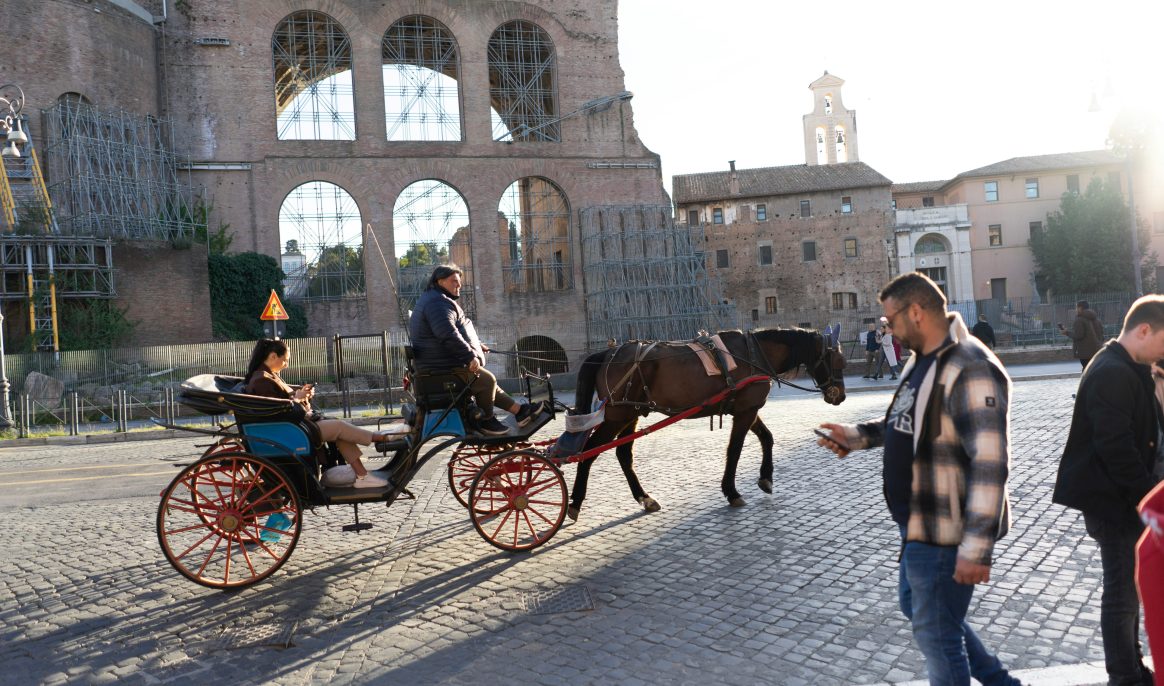
Farewell to Rome’s historic “botticelle” (tourist horse-drawn carriages): 15 coachmen have agreed to switch to taxis thanks to an agreement with the city.
The streets of Rome’s historic center are about to undergo a revolution that has been decades in the making. The centuries-old tradition of horse-drawn carriages—now incompatible with the pace of the modern metropolis—is coming to an end. Climate change and increasingly scorching summers have made it untenable to keep horses on the scorching asphalt.
Over the years, the number of active licenses has gradually dropped from thirty-eight to just sixteen operators. Today, thanks to complex union and institutional negotiations, fifteen of these carriage drivers have reportedly formally agreed to give up their horse-drawn carriages. This decision marks a fundamental turning point for animal welfare and the modernization of Rome’s tourism services, as reported by the daily newspaper Il Messaggero.
Financial support and the role of manufacturers
The success of the operation coordinated by the City of Rome rests on a strategy that combines professional retraining with concrete financial incentives. It is not merely a matter of offering drivers the option to convert their permits into taxi licenses, but also of providing them with logistical support for the purchase of their service vehicles.
Led by Mayor Roberto Gualtieri and Animal Welfare Commissioner Patrizia Prestipino, the municipality has forged close ties with a Japanese automaker. This partnership aims to help manage the costs of purchasing vehicles through targeted subsidies and benefits. This will allow former cab drivers to launch their new careers in public transportation without having to bear the full financial burden of the initial investment.
The last driver’s refusal and pressure from associations
Despite the support of almost the entire profession, the final transition to ethical mobility has hit an unexpected roadblock. According to available information, a single operator refuses to sign the agreement, earning him the nickname “the die-hard coachman.” This isolated stance risks delaying the definitive end of a controversial practice.
The main animal welfare organizations, including the LAV and the OIPA, have expressed their satisfaction with this milestone. However, they are calling on the municipality to immediately begin the administrative process for the fifteen volunteer coachmen, without waiting for the green light from the last driver. Preventing the horses from being exposed to future heat waves is the top priority for these organizations, which have for years denounced the dangers associated with the immense physical exertion imposed on the horses under the capital’s scorching sun.
Source: LAV / OIPA
Share: