
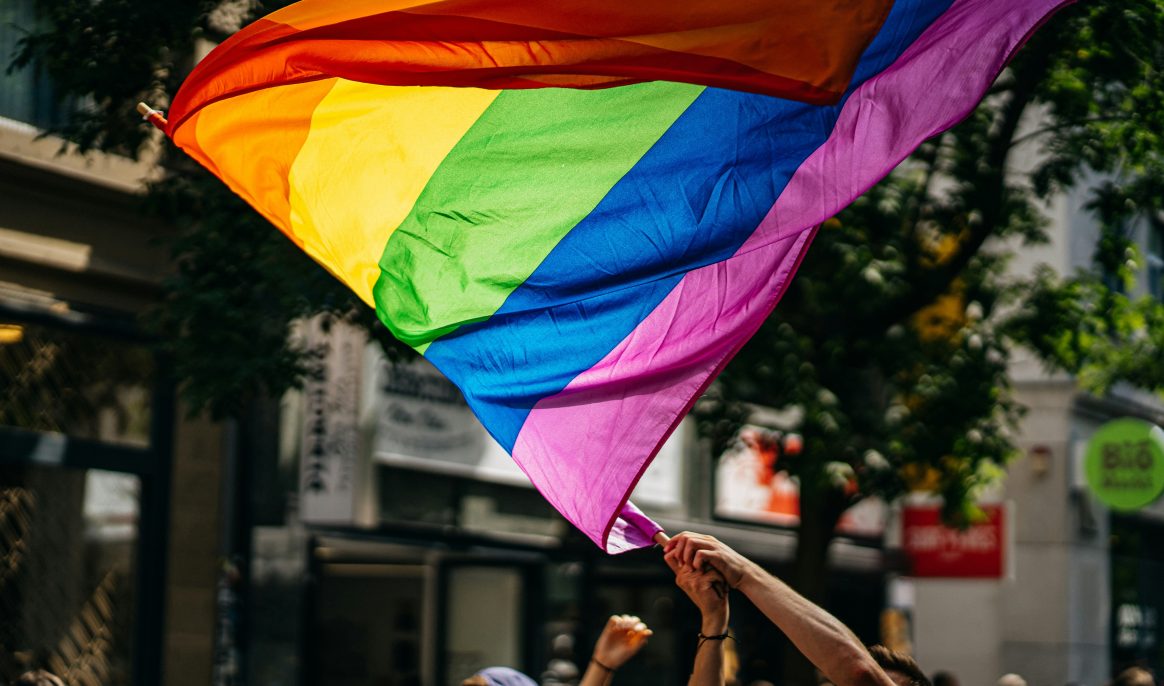
©Raphael Renter | @raphi_rawr via Unsplash
-
May 21, 2026 10:39
Italy takes another step backwards on LGBTQIA+ rights:ILGA-Europe's new "Rainbow Map2026" report paints a picture of a country increasingly isolated on the European stage.
With an overall score of just 24% for civil rights and protections for LGBTQIA+ people, Italy has fallen to 36th place in the European ranking. The country is now a long way from the European average and quite close to countries such as Hungary and Poland, often criticized for their discriminatory policies.
But the most alarming fact lies elsewhere: over the last ten years, Italy has lost more than 16 points, recording one of the worst declines in Europe. While countries such as Spain, Malta and even Greece continue to extend their rights and protections, Italy seems to be going backwards.
According to ILGA-Europe, this result can be explained not only by what is lacking (marriage for all, full recognition of same-sex families, effective laws against hate crimes), but also by the progressive dismantling of certain existing protections and an increasingly hostile political climate towards the LGBTQIA+ community.
Among the most critical points highlighted by the report are :
- the obstacles put in the way of rainbow families (homoparental families);
- blocking the transcription of birth certificates for children of same-sex couples;
- restrictions on transgender and non-binary people.
The law on surrogate motherhood (GPA), transformed into a "universal crime" by law 169/2024, is also in the crosshairs. According to many associations, this measure is almost unique in Europe, and risks to further isolate families concerned, both legally and socially.
Adding to the gloom is the absence of specific legislation against hate crimes motivated by sexual orientation or gender identity. The legal vacuum leaves millions of people more exposed to discrimination, violence and hate speech.
The situation of transgender and non-binary people is also particularly worrying. The report denounces bureaucratic restrictions, obstacles to gender affirmation and political and media campaigns deemed stigmatizing. Furthermore, Italy still has no self-determination-based law for changing civil status.
At the same time, while Italy is backtracking, the European Commission has decided to ask member states to ban so-called "conversion theories", pseudo-scientific practices that claim to modify sexual orientation or gender identity, and which the UN considers cruel and degrading.
Brussels will not, however, introduce a binding European ban: the Commission will merely recommend that member states legislate themselves, claiming that it does not have sufficient powers to impose an EU-wide ban.
"The lie is to think that LGBTQIA+ people have something to correct," said European Equality Commissioner Hadja Lahbib. According to European data, one in four LGBTQIA+ people have undergone conversion practices, a proportion that rises to almost one in two among transgender people.
To date, only eight European countries have explicitly prohibited these practices.
And so, while part of Europe is at least attempting to strengthen protections, Italy continues to slide towards what many associations now describe as a true "gray zone" in terms of civil rights.
Share: