
©picture alliance / NurPhoto | Jose Luis Torales
-
Jun 27, 2026 08:23
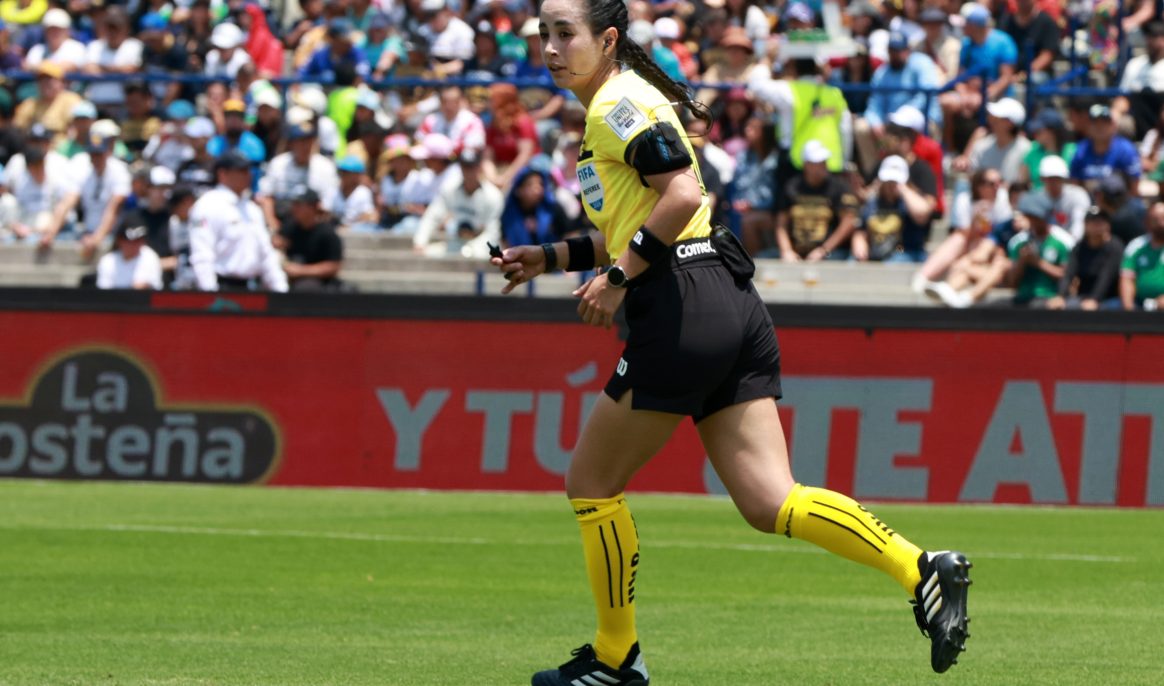
Mexican Katia García will referee the Tunisia vs. Netherlands match at the 2026 World Cup. She is the third woman in the tournament’s history to do so. What is striking is that this event is still making headlines—a sign that equality is still a long way off.
Mexican referee Katia García has been officially appointed by FIFA to officiate the crucial match between Tunisia and the Netherlands at Kansas City Stadium, a game counting toward Matchday 3 of Group F in the 2026 World Cup.
After making her tournament debut as the fourth official on the sidelines on three occasions (during the Netherlands–Japan, England–Croatia, and United States–Australia matches), García will lead an international officiating team. She will be assisted by her compatriot Sandra Ramírez and Spain’s José Enrique Naranjoen as assistant referees, while Paraguay’s Juan Gabriel Benítez will round out the team as the fourth official.
The very exclusive club of female referees
The rise of the 33-year-old Central American rightfully propels her into an extremely exclusive elite club: she becomes the third woman in history to lead a refereeing trio during the final phase of a men’s World Cup. Before her, the path had been paved by France’s Stéphanie Frappart, who broke the glass ceiling in 2022 in Qatar by officiating the Germany vs. Costa Rica match.
During that same 2026 tournament, the debut went to American Tori Penso, who took the field for the Czech Republic vs. South Africa match in Atlanta. She would repeat the experience during the Ecuador vs. Germany match. For García, this marks her definitive international breakthrough, having already gained experience officiating men’s soccer abroad during a friendly match between the United States and Panama.
When will the exception finally become the rule?
The media buzz surrounding Katia García’s appointment, however, highlights an inevitable cultural paradox. The fact that having a woman referee Ronald Koeman’s Oranje still makes headlines—with “historic” headlines and celebrations—shows just how far we still are from achieving normality and gender parity.
As long as the selection of a female referee is treated as an extraordinary event, a progressive “concession,” or a record-breaking statistic, we cannot speak of true equality. The technical competence of García, Frappart, and Penso does not depend on their gender: the true cultural turning point will come the day that governing bodies evaluate referees exclusively on their physical abilities and decision-making, without the public and the media feeling the need to highlight their gender.
Share: