
©Chang Ye via Unsplash - image d'illustration
-
May 23, 2026 13:37
New York Mayor Zohran Mamdani launches "Soccer Streets": 50 streets, in front of schools, become free football fields in preparation for the 2026 World Cup.
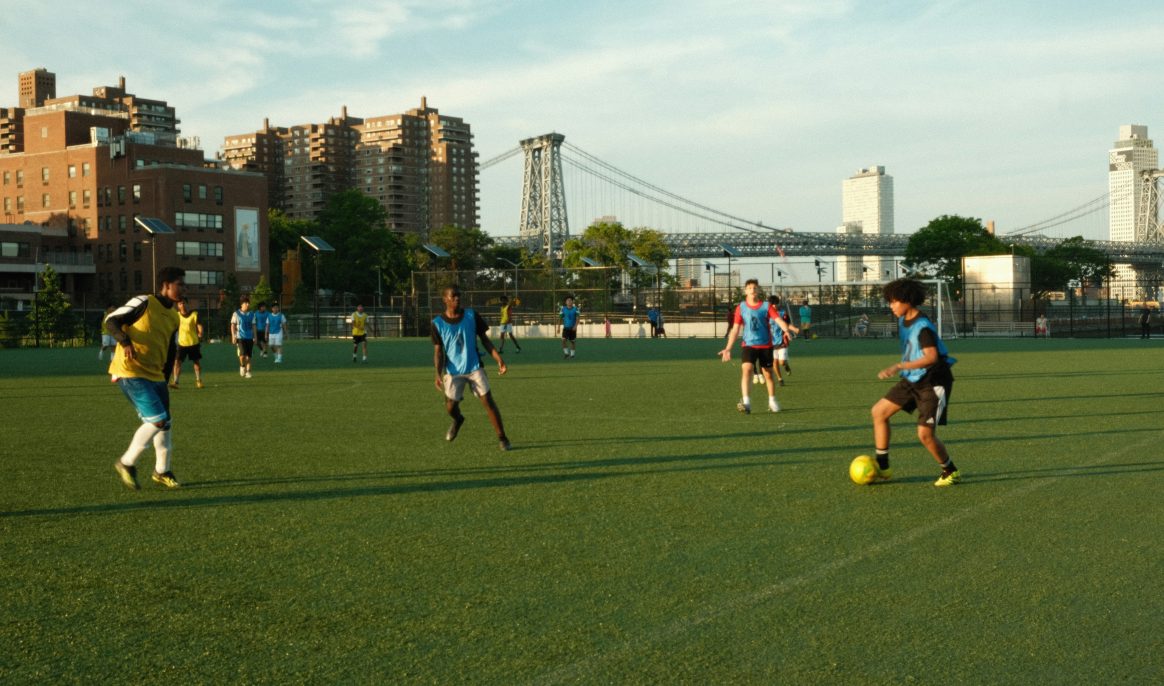
In New York, the countdown to the 2026 World Cup also includes sidewalks, schoolyards and neighborhood streets. Socialist Mayor Zohran Mamdani has launched "Soccer Streets", a project which, until June 26, will transform some fifty streets in front of public schools in the five boroughs of New York into little villages dedicated to football. The idea is simple: close the streets to traffic and give them back to youngsters. Instead of cars, there will be football cages, ephemeral pitches, art workshops, national team flags to paint and neighborhood parties designed to involve students, families and local residents.
The initiative kicked off on May 1 and will run throughout the city, school by school, until the last day of the school year. According to the city administration, the project aims to prevent the World Cup in the United States from remaining an event reserved exclusively for sponsors and luxury tourism. Mr. Mamdani explained that the aim was to bring "the joy of soccer" even to those who will never set foot in a FIFA stadium.
Football as a public space and a bonding agent
During the presentation of the program, the mayor was filmed playing ball with the children, wearing an Arsenal F.C. jersey. An image that sums up the political message behind "Soccer Streets": to make the World Cup a shared, popular experience, far removed from the idea of an ultra-secure, hyper-commercial mega-event. "Let's open the streets to the game," said Mr. Mamdani, emphasizing that the "Soccer Streets" program represents one of the most effective tools for returning public space to residents.
In many New York neighborhoods, the street in front of the school is the only real open space accessible to young people. The days organized as part of the project include impromptu matches, training sessions, sports exercises and creative workshops linked to the national teams taking part in the World Cup. So it's not just about sport, but also about sharing moments designed to strengthen the sense of belonging within the neighborhoods.
A World Cup for the whole city
The project was set up in collaboration with the NGO Street Lab and with the support of Chobani. The initiative is part of the wider "Open Streets for Schools" program, which enables schools to temporarily close adjacent streets to traffic for educational and recreational activities. Maya Handa, City Manager for the World Cup, explained that the competition "isn't just about matches in stadiums", but also about the ability to engage neighborhoods and create large-scale mobilization.
And while students will be playing on the mini-stadiums set up in front of schools, the city is also preparing major public events for 2026. New York will host eight tournament matches at MetLife Stadium, including the grand final on July 19. In addition, five official fan zones will be set up, one in each borough, where citizens and tourists alike will be able to watch the matches free of charge. In the meantime, the World Cup begins now. Not in multimillion-dollar stadiums, but at the foot of buildings, on playgrounds and in streets closed to traffic, where hundreds of young people are rediscovering the pleasure of playing together.
Source : NYC Mayor's Office
Share: