©William Rudolph via Unsplash
-
Jan 10, 2026 02:00
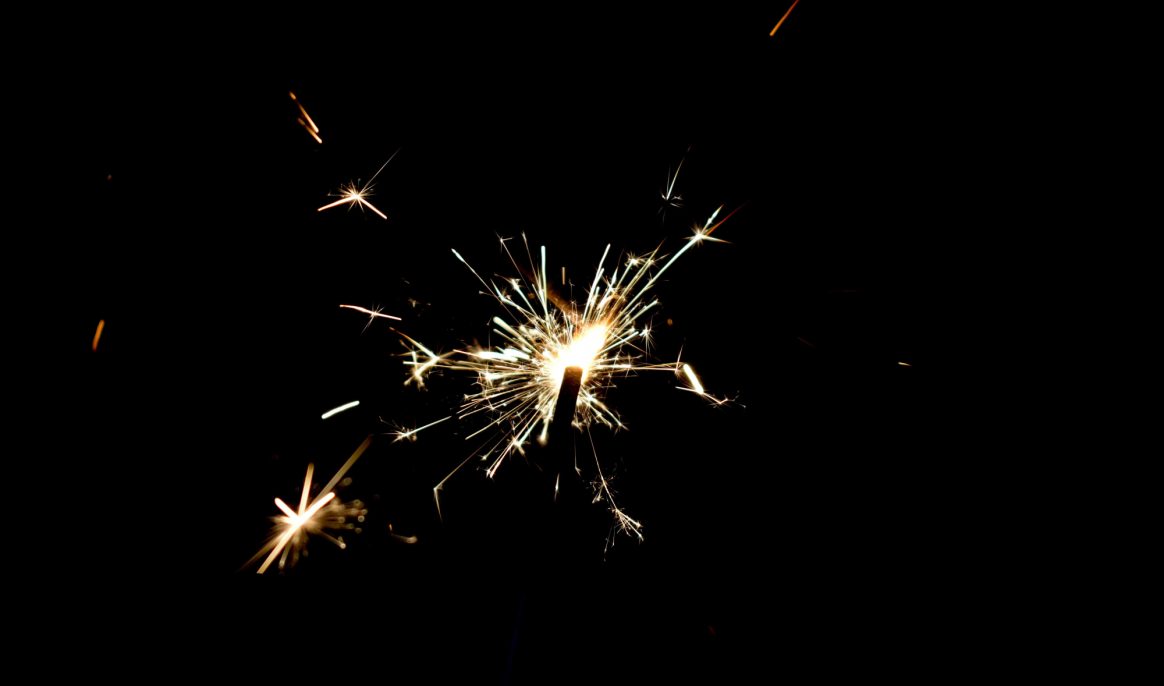
What happened on New Year's Eve in Crans-Montana has once again put sparkling candles at the center of attention: little - seemingly harmless - firework sticks that brighten cakes, desserts and even champagne flutes during parties and celebrations. But besides the fire hazard, dramatically demonstrated by the Swiss incident, another, lesser-known risk lurks in these products.
The studies on sparkler candles
Sparkling candles are not just decoration; they actually behave like mini fireworks. That's according to an Italian study within the Davenpros project, coordinated by Professor Tiziano Pagliaroli of the Università Niccolò Cusano, in collaboration with Roma Tre University and the ENEA research center in Casaccia.
The team, which originally worked on developing sensors to measure the speed of particles in rocket engines, applied the same technology to sparkling candles. The results are remarkable: the metal particles released during combustion move at speeds between 20 and 80 meters per second and almost all of them end up on the surface of the cake. In the process, they take metals such as aluminum, iron, magnesium, barium, copper and strontium with them.
As Pagliaroli explained to Repubblica, on a small scale these candles mimic some of the typical characteristics of propulsion systems in space travel and are loaded with the same metals used as propellants in rockets. This spectacular effect is precisely due to the oxidation of these tiny metal particles, which produce the characteristic colored sparks.
A study published in the journal Food Analytical Methods by Brazilian researchers also confirms the concerns surrounding the use of these candles. In the research, the residues of fountain-like sparkling candles were examined. Chemical analysis showed micro amounts of metals: barium (0.3%), copper (0.18%), strontium (0.06%), iron (0.03%) and aluminum (0.02%), plus traces of cadmium and chromium on exposed surfaces.
These are seemingly low percentages, but still worrisome because these are substances that really do not belong in food, especially if it is intended for children or sensitive individuals. The authors stress that although the amounts are minimal, repeated exposure can exceed daily intake limits considered safe by international health authorities.
In summary, both studies point to the same problem: sparkling candles release metal particles that can end up on food when used for effect. Thus, seemingly innocuous decorations turn into a potential health hazard.
The fire hazard
Moreover, the Swiss tragedy has reminded us how dangerous they can be in the most dramatic way. As explained by ballistic expert Raffaella Sorropago who conducted an experiment, sparkling candles contain gunpowder and can reach temperatures of up to 600°C. If they are used near non-fireproof materials, such as paper, textiles or sound-absorbing panels, the flames can start a fire within seconds.
Sorropago stresses that, when used correctly, they pose no danger, but it only takes placing them too close to flammable materials to have immediate dramatic effects.
To reduce the risks, experts recommend using them in moderation, keeping them away from edible surfaces and considering safer decorative alternatives, including cakes, especially those intended for children. Traditional candles or LED light decorations can provide the same visual effect without compromising the safety or health of celebrants.
Share: