©Unsplash
-
Jan 28, 2026 20:30
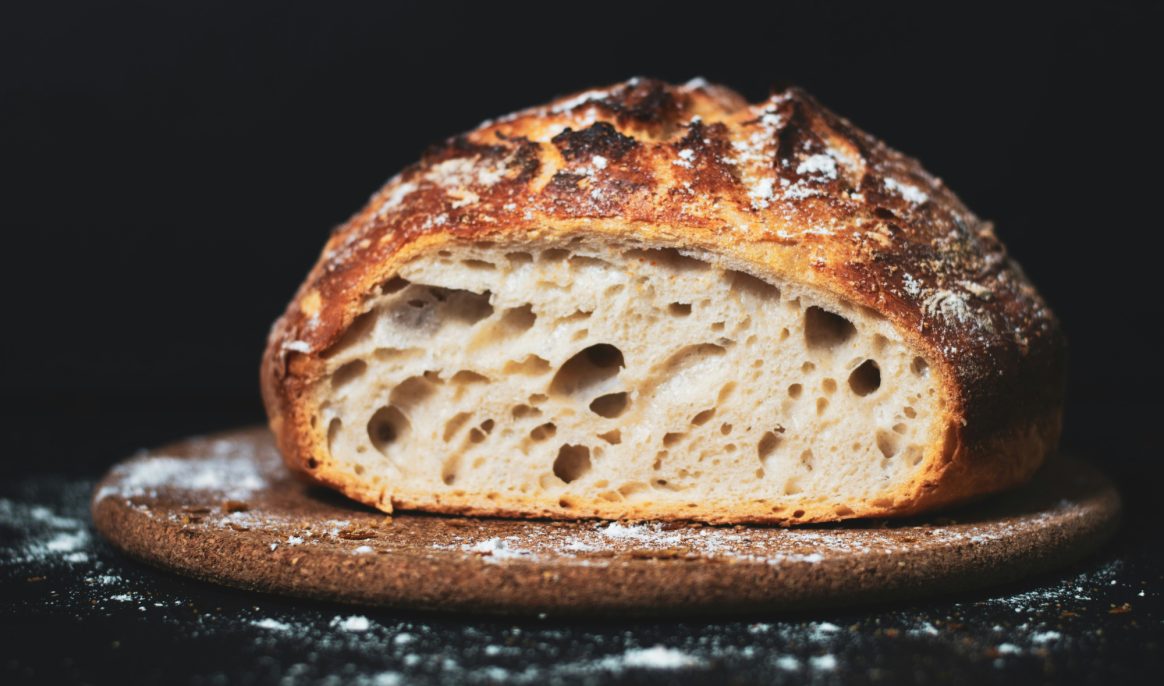
A fragrant, crisp, golden crust? The appearance of a loaf of bread, the part that attracts us most at the time of purchase undoubtedly plays a decisive role in encouraging us to choose one loaf over another. Beware of the crust, however, as it should be eaten in moderation...
In a recent study, experts from Crea, the Italian Council for Agricultural Research and Economy, highlight the chemical reaction that mainly affects bread crust, which is said to contain components that are poorly tolerated by the body and capable of accelerating cell ageing.
These include the Maillard reaction, named after the French chemist who studied the reactions between proteins and sugars when baked at temperatures in excess of 160-170°C, and the well-known acrylamide.C, as well as the well-known chemical acrylamide, found mainly in the 'burnt' parts of many starchy foods (such as chips, bread, breakfast cereals, cookies, rusks, crackers and packaged snacks).
"We carried out the test on bread extracts, including the crumb and crust," says Fabio Nobili, researcher at Crea. "The compounds produced by the Maillard reaction generate acrylamide. In a cell culture model, we observed that the cells themselves 'don't like' the products of this type of cooking."
This does not mean that bread should be avoided at all costs, but that it is important to choose good quality bread and, if possible, try to bake it yourself.
The important thing is to eat it in moderation, and to use high-quality ingredients in its production (leavening process, origin of flour, variety of wheat used...). All products that prioritize the quality of raw materials over quantity are therefore preferable. What's for more, knowledge of the entire production chain guarantees the safety of the final product.
What if the bread is moldy?
It's best to throw it out. Scientists have shown that mold roots penetrate soft foods very easily. Molds are a type of fungus with a stem topped by spores, which cause the typical blue-green color seen on food. What is not visible to the naked eye are the underlying roots (mycelium or hyphae) which invade the food on which the mold grows. This network of roots is microscopic, so a loaf of bread that looks 'clean' may in fact be invaded by mold. Mould spores are carried by the air and settle on unprotected or prepared food, where they find an ideal environment in which to proliferate.
A loaf of bread that you've left in the cupboard for two or three days, which is soft, sticky and gooey, with a crumb that tastes and smells slightly sweet? It's best to throw it out.
Share: