
©Mark Hang Fung So via Unsplash
-
Jul 12, 2026 08:05
In Japan, stray cats are taken very seriously: some signs warn drivers about their unpredictable crossings in urban areas.
On an ordinary street in Japan, amid small houses, neatly trimmed hedges, power lines hanging over the asphalt, and the quiet of a residential neighborhood that always seems on the verge of being disrupted, a yellow sign featuring three black silhouettes of cats in mid-leap may appear. The message is simple: ネコ飛出し注意, literally “watch out for cats darting out.” A short, practical, almost familiar phrase. The kind of warning that makes you smile for a second, then compels you to watch the road with a whole new level of attention.
The information is based on real facts, with one (important) caveat: these “cat” road signs do indeed exist, even if they are often the result of local initiatives or specific installations, rather than a uniform national signage system deployed everywhere. Japan has a category of warning signs dedicated to animals that might suddenly dart onto the road. The most common design features a deer, but Japanese ministry guidelines allow for other animals to be depicted when the risk involves different species, using a silhouette appropriate for the animal found in that area.
Cats make their debut in traffic signage
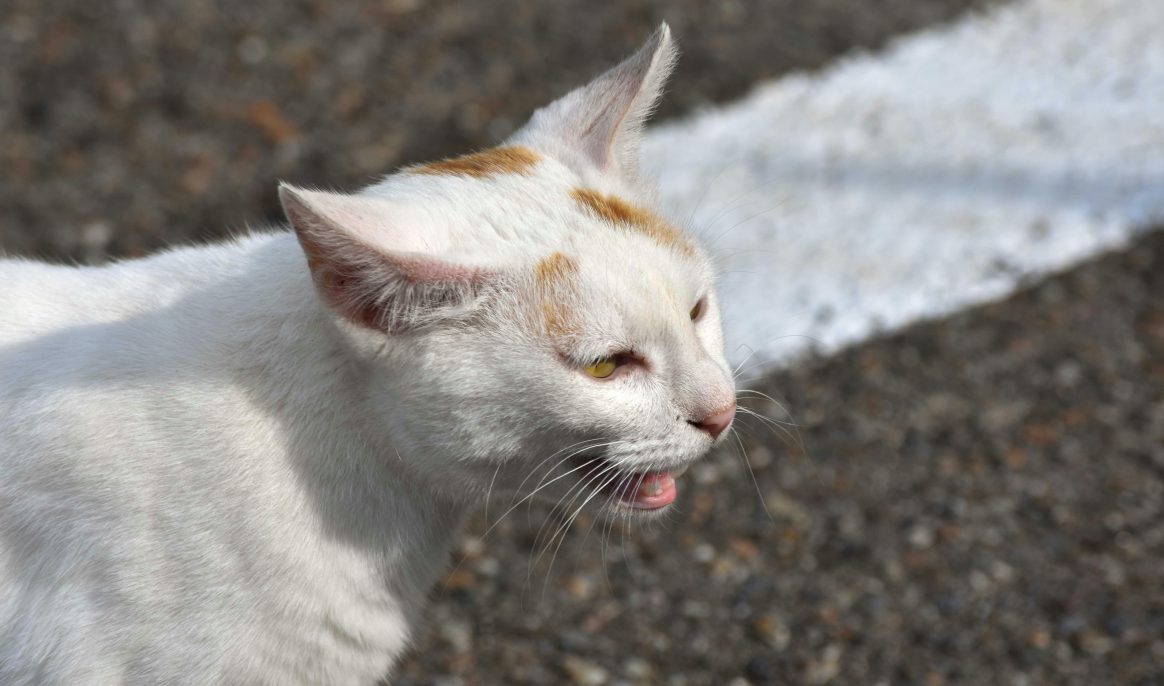
What’s striking is the precision. The sign photographed online warns of a risk that is only seemingly minor: a cat may dart out of a bush, through a gate, or from around the corner of a house; cross diagonally; stop in the middle of the road; or dart off again at the worst possible moment. Anyone who lives with a cat is familiar with this very particular logic, characterized by sudden movements and decisions made in a fraction of a second, often in complete disregard of traffic laws.
In Japan, wildlife-related signage varies greatly from region to region. In Hokkaido, for example, the regional office of the Ministry of Land, Infrastructure, and Transport reports that there are specific signs dedicated to cows and foxes—animals more closely associated with these landscapes and this type of road. In other regions, road management agencies remind drivers to be extra vigilant on stretches of road marked with “animals” signs, especially where tanuki, cats, or deer frequently cross the road. A document from the Ishinomaki district in the northeast of the country specifies that tanuki and cats are among the animals most frequently involved in local accidents, urging drivers to observe speed limits and drive cautiously in the designated areas.
Signs specifically depicting domestic cats appear to be rarer, almost resembling urban collectibles. A Japanese website specializing in road signs has cataloged a few examples installed in public spaces, including a “cat” sign on National Route 33 in Kochi Prefecture, attributed to the Ministry of Land, Infrastructure, and Transport and installed in 2005. This adds an interesting twist to the story, elevating it beyond the simple category of “cute Japanese road sign”: in some cases, the cat has truly become part of official road signage.
On Iriomote, cats are a serious matter
There is an even more delicate case: the island of Iriomote, in the Okinawa archipelago, home to the Iriomote-yamaneko, a rare wild cat found nowhere else. In this context, warnings about cats take on an entirely different dimension. The Japanese Ministry of the Environment has repeatedly urged drivers on the island to slow down and watch out for unexpected crossings by the yamaneko, particularly on stretches where sightings are more frequent and where traffic signs have been installed.
The Iriomote Wildlife Conservation Center explains that animal underpasses have been built on the island, along with audible warning strips on the asphalt, signs at locations where the cats are most often spotted, and mobile devices (repositioned based on the latest sightings). In December 2025, the center reported an increase in sightings of young yamaneko along roads and urged drivers to reduce their speed in high-risk areas marked on the monthly maps.
Here, the sign loses any whimsical connotation. It becomes a practical tool for coexistence between human traffic and wildlife. A car traveling too fast—on an island where a vulnerable species shares the same roads as residents and tourists—is enough to turn an ignored warning into an irreparable loss.
Source: @houchouzamurai – Kyushu
Share: